Headstock
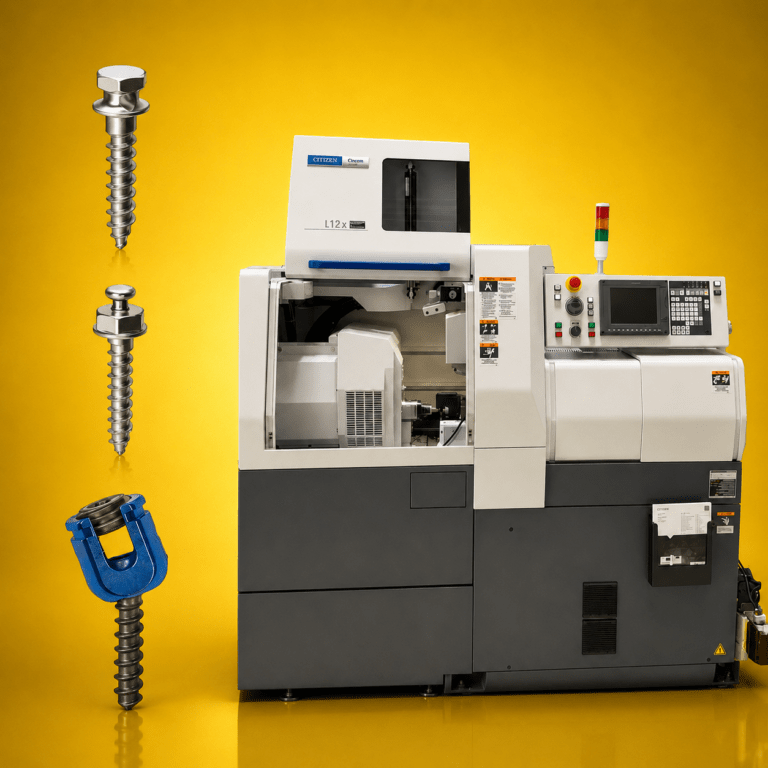
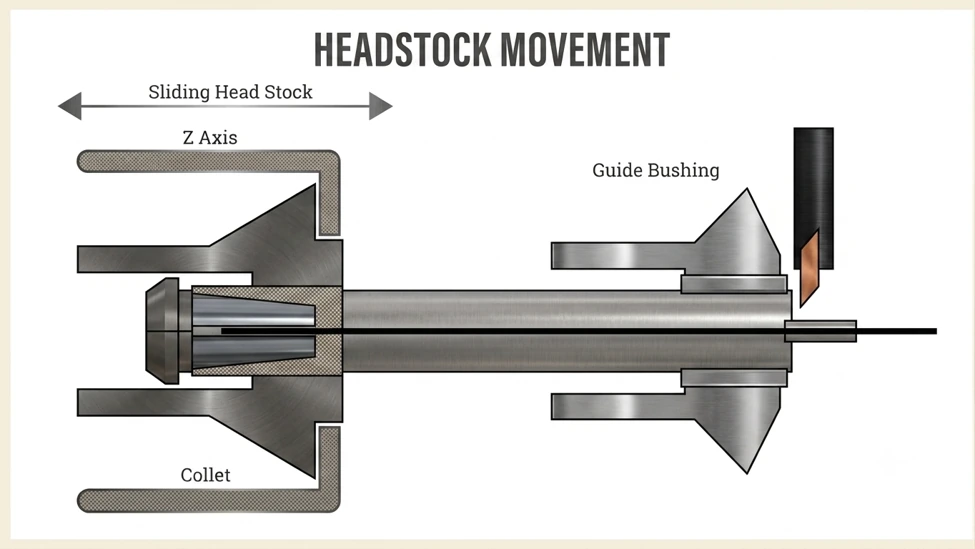
Unlike conventional lathes, where the tool moves along the workpiece, the headstock and workpiece move together on the Z axis in Swiss-type machines. This design places machining close to the guide bushing and supports the part during cutting. Its advantages include:
- Greater workpiece rigidity
- Prevention of workpiece deflection during machining
- High dimensional accuracy
- The ability to machine long parts
Guide Bushing
A guide bushing is a guide sleeve positioned in front of the main spindle and close to the cutting tools; the workpiece passes through it. Its main function is to support the part during machining and prevent vibration and bending.
The workpiece passes through the guide bushing and projects only a short distance beyond its front. Machining takes place very close to the guide bushing. This design prevents cutting forces from bending the part and greatly reduces workpiece vibration. Without sufficient support, long and slender parts can bend or vibrate, dimensional accuracy can fall, and surface quality can decline. The guide bushing addresses these issues.
Sub-Spindle
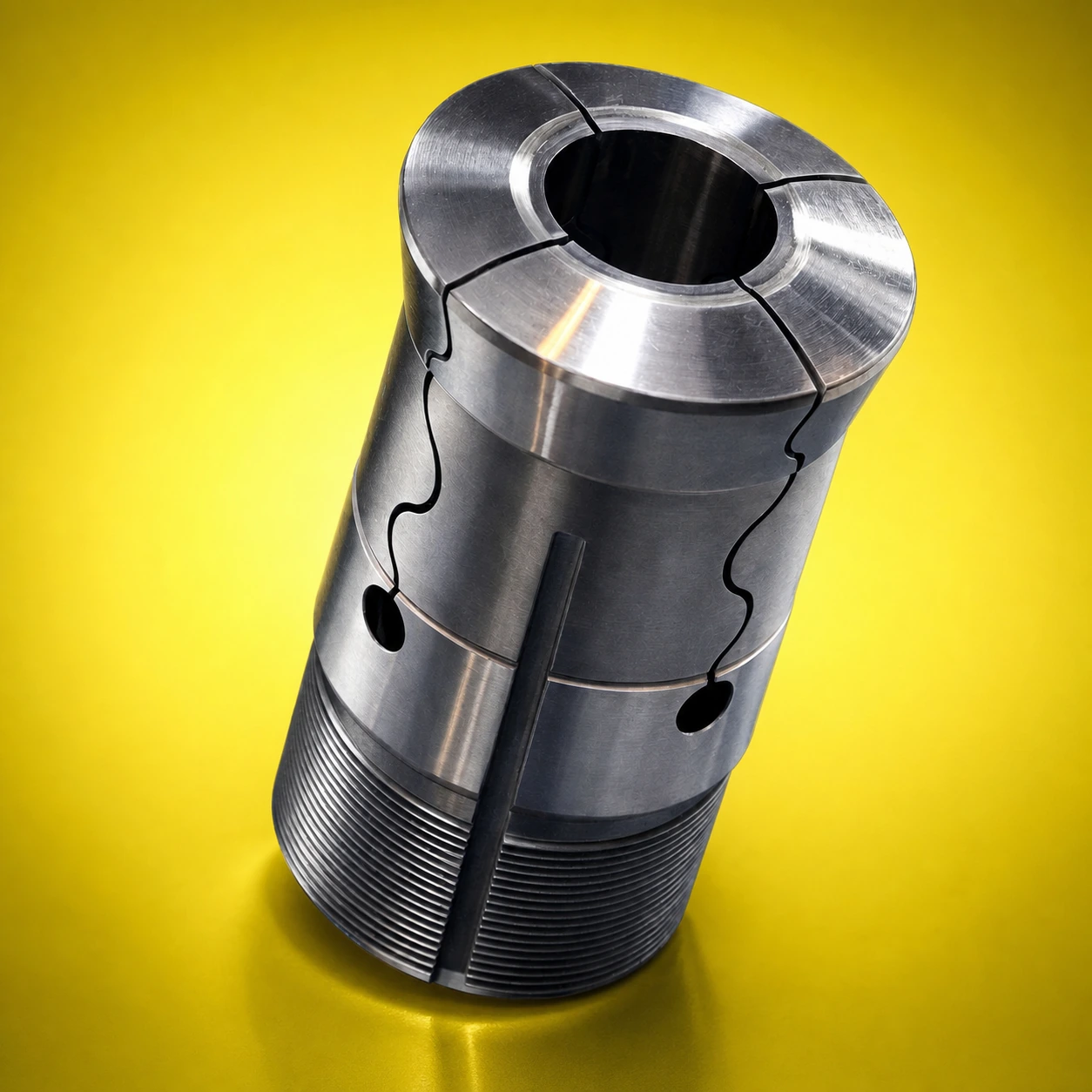
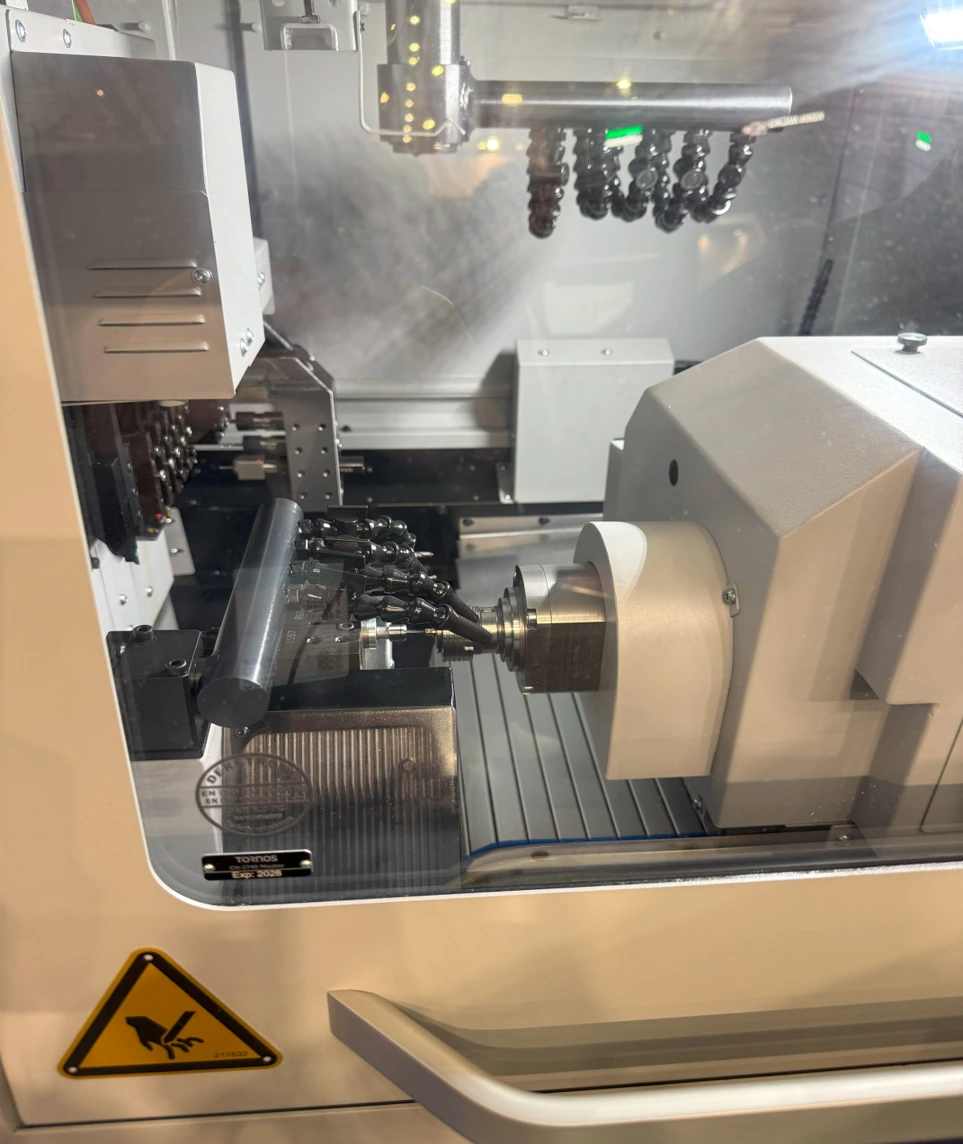
The sub-spindle is positioned opposite the main spindle. After machining is completed on the part held by the main spindle, it takes the workpiece and machines the second side.
In conventional processes, after machining one side, the operator must remove and re-clamp the part to machine the other side. In a Swiss-type machine equipped with a sub-spindle, the first-side operations are completed, the sub-spindle takes the part from the main spindle, cut-off separates the part, and the remaining operations continue in the sub-spindle. Advantages of the sub-spindle include:
- Complete machining of the part in one work cycle
- Removal of many secondary operations and part transfers
- Greater concentricity and accuracy between the two sides
- Reduced production time and higher output
Live Tools
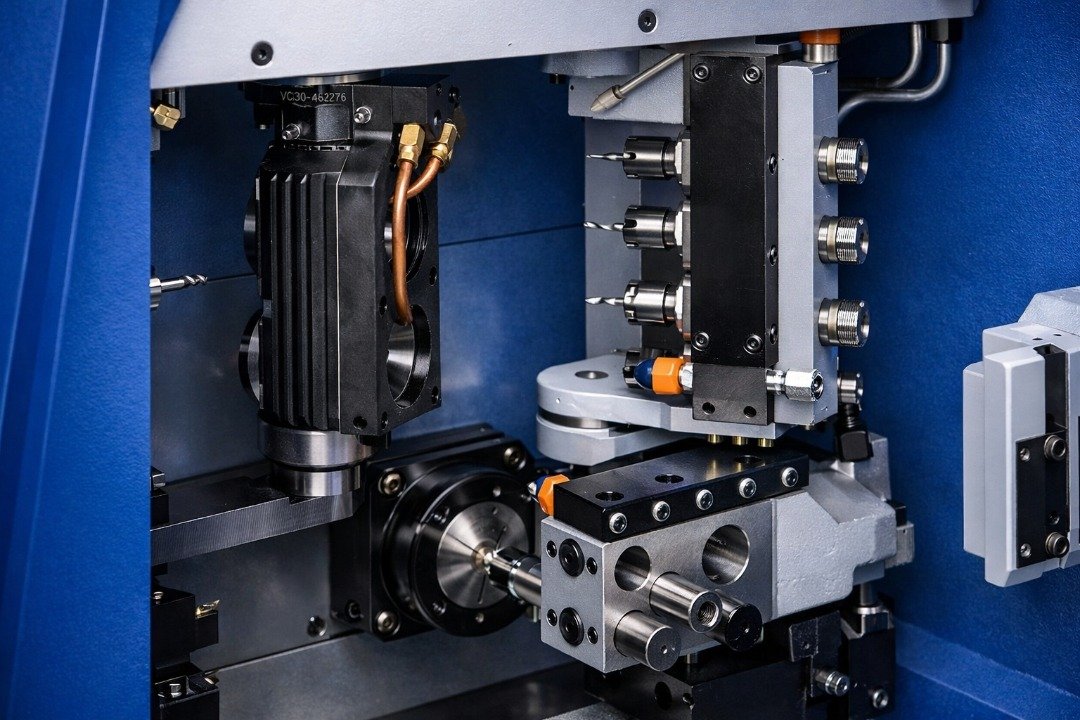
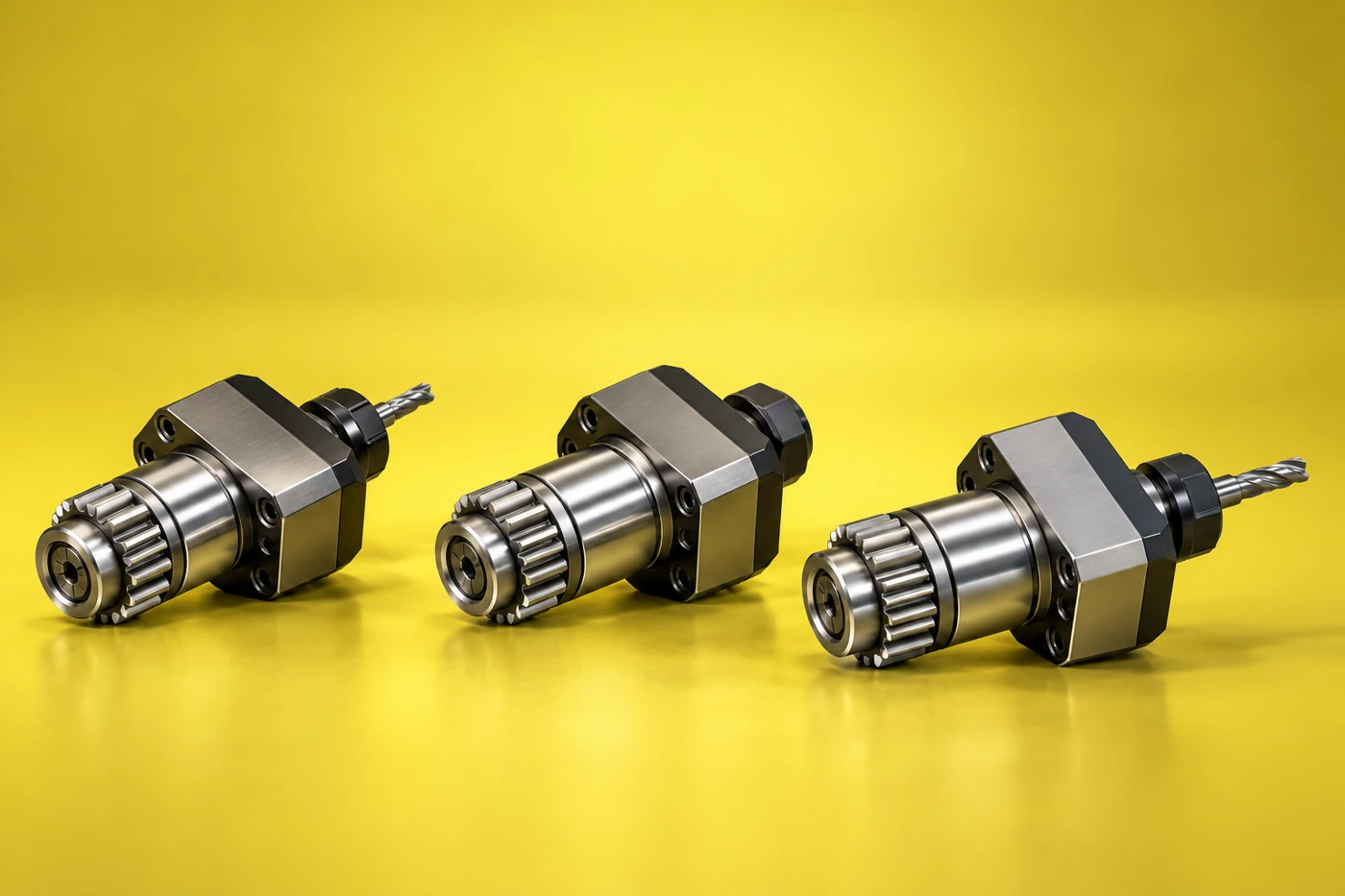
Live tools are tools that rotate under their own motors in addition to the machine’s normal movements. They make operations such as drilling, milling, and the creation of different profiles possible. A machine with only fixed tools can mainly perform turning operations; with live tools, it can also carry out:
- Cross drilling
- Axial drilling
- Cross milling
- Slot milling
- Flat milling
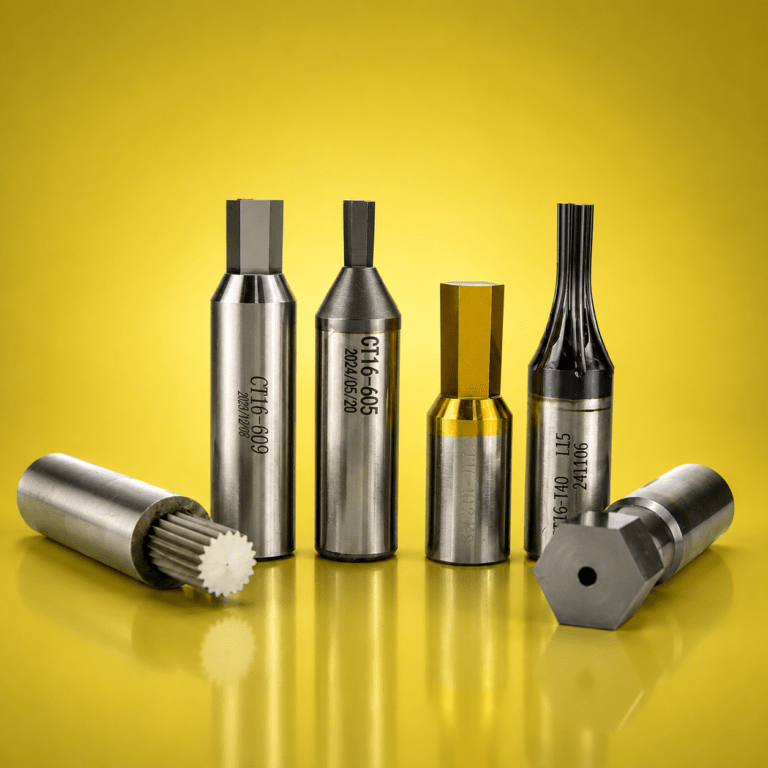
- Polygon machining
- Tapping
For this reason, a Swiss-type machine becomes a multi-operation machining unit. Main advantages of live tools include:
- Many milling and drilling operations can be completed without moving the part to another machine
- Reduced production time and setups
- All operations are completed in one setup, without re-clamping the workpiece
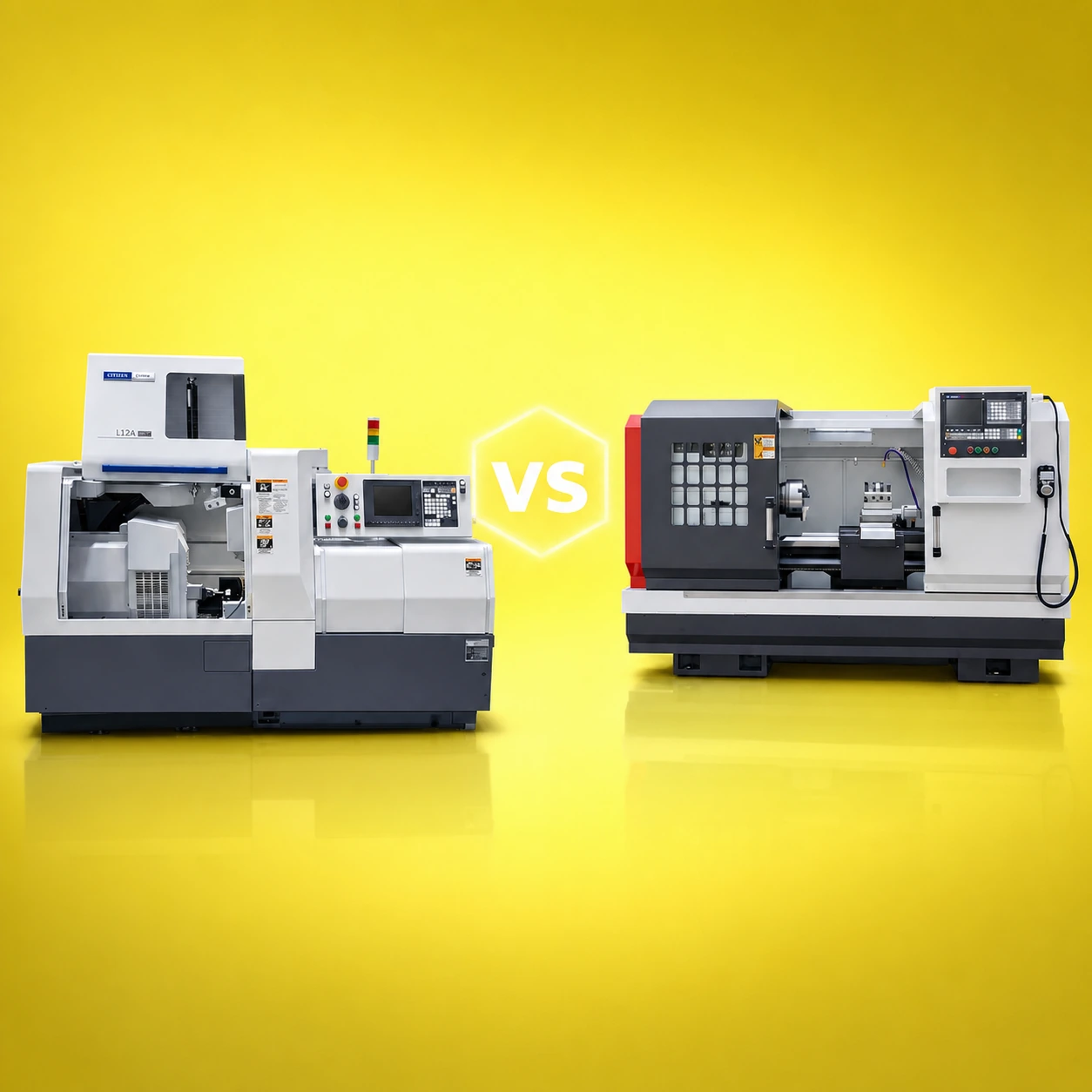
Comparison: Swiss-Type Machines and Conventional CNC Machines
In general, both machines are used to produce turned parts, but their mechanical design and workholding method differ. These differences make each machine better suited to certain applications.
| Feature | Swiss-Type Machines | Conventional CNC Machines |
|---|---|---|
| Design | Sliding headstock + guide bushing | Fixed headstock, without guide bushing |
| Machining location | Close to the guide bushing | The tool moves toward the part |
| Best suited to | Long, slender parts | Shorter parts with larger diameters |
| Workpiece holding | Guide-bushing support; higher accuracy | Collet or chuck; simpler setup |
| Production accuracy | Very high for long, slender parts | High and sufficient for most industrial parts |
| Output | Complete machining in one cycle | Faster setup; simpler programming |
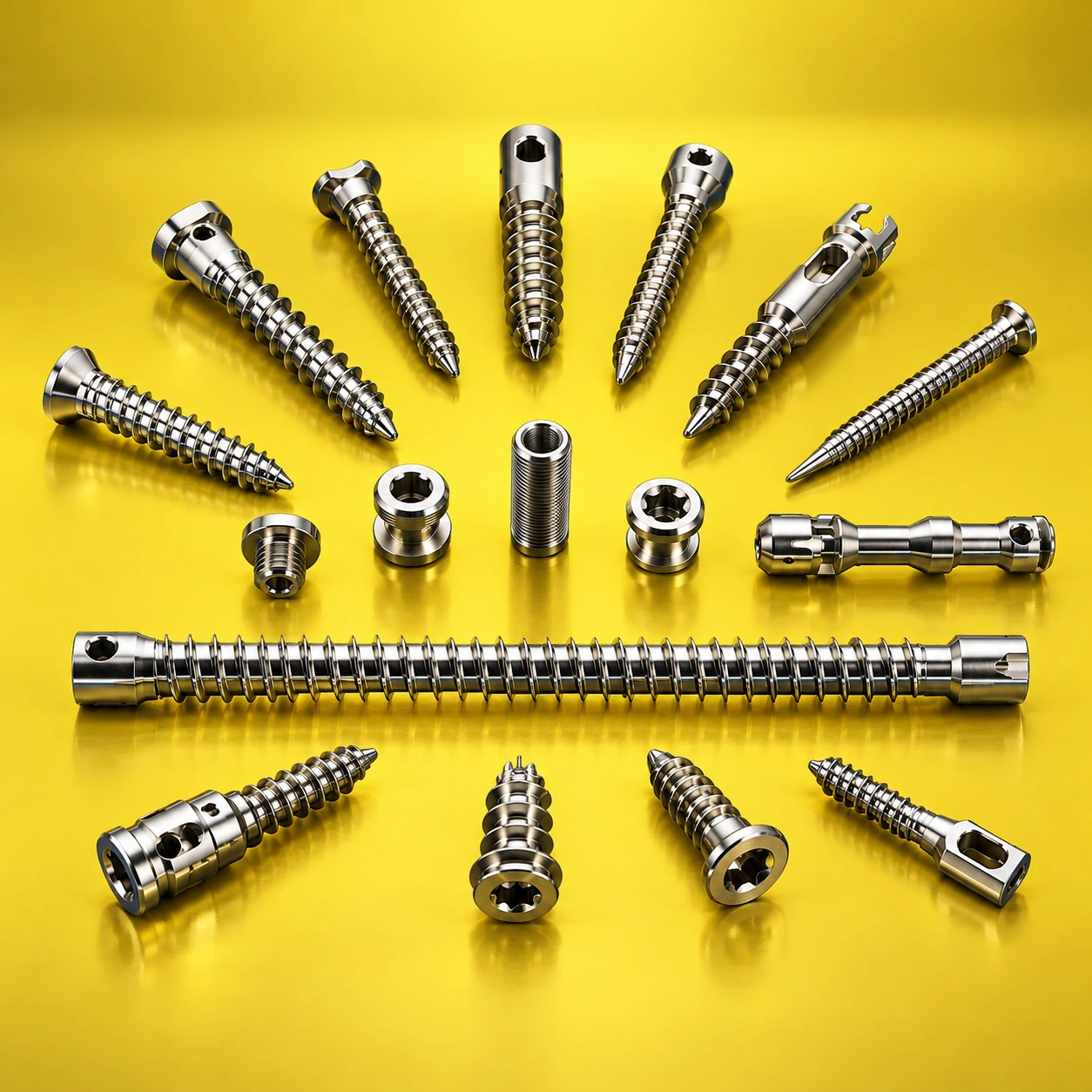
Main Applications of Swiss-Type Machines
- Medical implants and orthopaedic screws
- Dental parts (abutments and implants)
- Electronic connectors
- Watchmaking parts
- Aerospace parts
- Precision automotive parts
Advantages and Disadvantages of Swiss-Type Machines
Advantages
- Better workpiece support during machining
- High accuracy in slender, long parts
- Suitable for high-volume production
- Complete machining of the part in one cycle
Disadvantages
- Higher price than conventional lathes
- More complex setup
- Need for a specialist operator
- Limitations with large-diameter parts
When Should You Choose a Swiss-Type Machine?
A Swiss-type machine is justified when the part:
- Has a small diameter
- Has a long length
- Requires very tight tolerances
- Is produced in high volume
In contrast, a conventional CNC machine is more suitable when the part has a large diameter or simple geometry, production volume is low, or capital cost is important.
Types of Swiss-Type Machines by Application
Simple Swiss-Type Machines
One spindle and a limited number of tools. Suitable for simple parts and medium production volumes.
Multi-Axis Swiss-Type Machines
More axes and live tools. They allow complex milling and drilling operations.
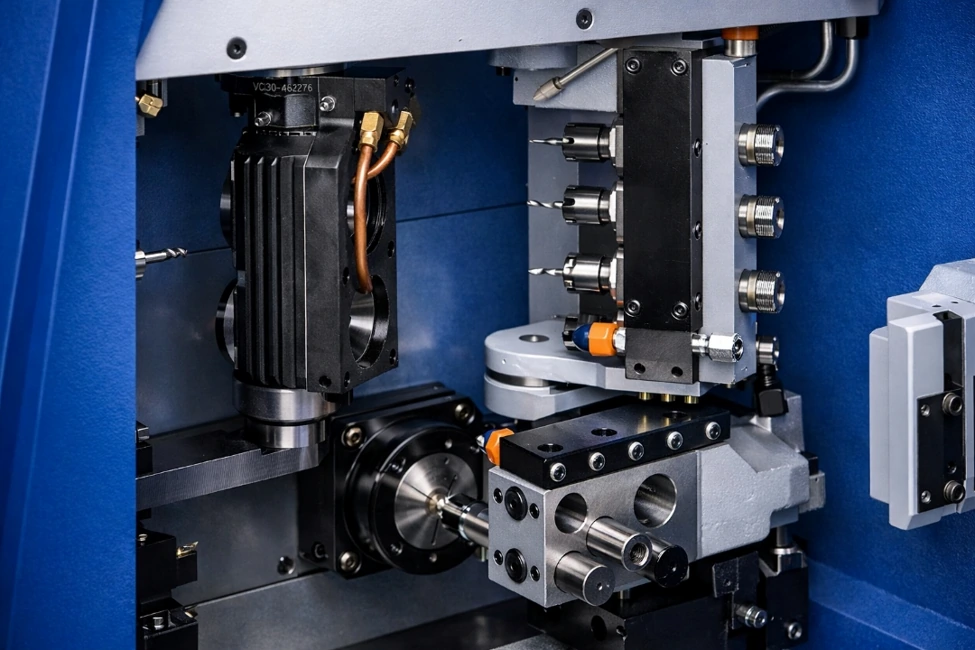
Two-Spindle Swiss-Type Machines
Main and sub-spindles. They allow complete machining of both sides of the part in one cycle.
Advanced Swiss-Type Machines
Several live-tool stations, a B axis on some models, and back-and-front machining. Main applications: medical parts, aerospace, and highly complex parts.
Related Technical Topics
This article is also related to the following technical searches:
- Swiss type
- Swiss-type machines
- Headstock
- Components of Swiss-type machines
- Guide bushing
- Sub-spindle
- Live tools
- Cross drilling
- Axial drilling
- Cross milling
- Slot milling
- Flat milling
- Polygon machining
- Tapping
- Comparison of Swiss-type machines and CNC machines
- Main applications of Swiss-type machines
- Dental parts
- Abutments
- Implants
- Orthopaedic screws
- Multi-axis Swiss-type machines
- Simple Swiss-type machines
- Two-spindle Swiss-type machines
- Advanced Swiss-type machines