Introduction to Rotary Broaching Tools
Rotary broaching tools are used to create different internal wrenching profiles in parts. Broaching can be performed by punch broaching or rotary broaching. Punch broaching places load on the machine, creates high friction, and reduces tool life. By reducing friction and machine load, the rotary method increases tool life and reduces production time and cost.
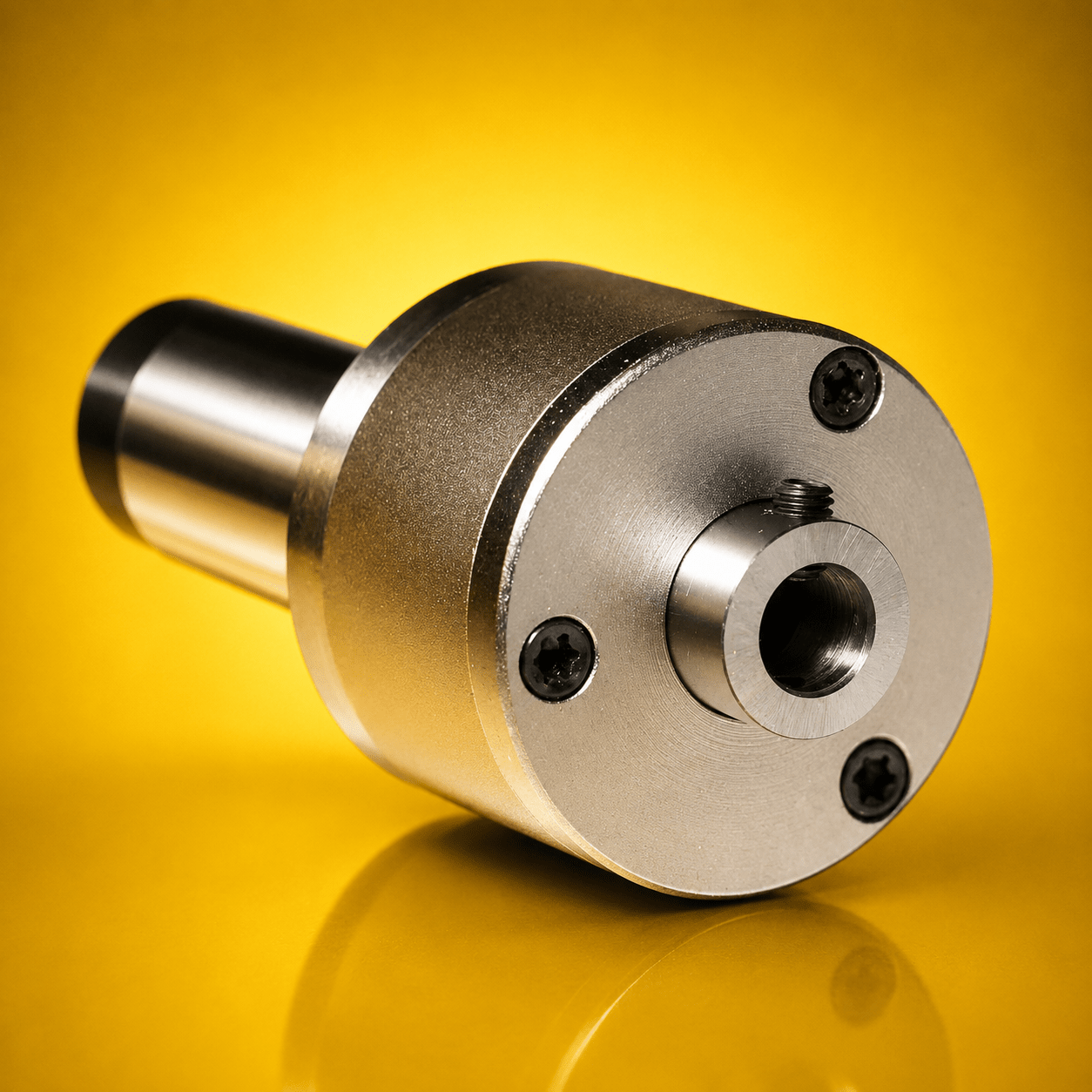
A rotary broach consists of a rotary holder and a broach tool. The rotary-broach holder has a one-degree angle to the horizontal axis. It engages a rotating workpiece while the live tool is not rotating. Because of this one-degree angle, one corner of the tool is under load at any moment and advances to the required depth. This reduces tool stress and increases machining speed.
Rotary broaching is a precise method for producing polygonal profiles at high speed. The error of this method is below 0.01 mm. These characteristics have made rotary broaching widely used, particularly in medical, aerospace, and automotive industries.
Profiles That Can Be Produced
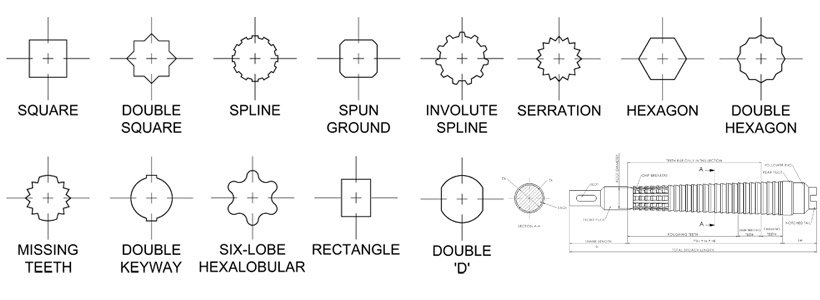
The following profiles can be produced with this tool and used in materials such as aluminium, brass, steel, plastic, titanium, and stainless steel. Hexagonal and square profiles are the most common rotary-broach profiles.
Broaches are often made from M-2 High Speed Steel (HSS), but they can also be made from harder grades such as M-42, PM T-15, or PM M-4 HSS. Coatings such as titanium nitride, titanium carbonitride, and titanium aluminium nitride can also be used to strengthen the tool and extend its service life.
Calculating Hole Depth for Broaching
The permitted broaching depth is equal to twice the hole diameter. In rotary broaching, a profile matching the tool is produced on the workpiece with high accuracy. For this reason, broaches are made with a positive tolerance. The drill diameter is usually selected slightly larger than the broach tool, by about 3%, while the deburring-drill diameter is selected slightly smaller.
The following relationships can be used to calculate drilling depth:
- Method 1: Hole depth = H (the size of the broach tool itself)
- Method 2: Hole depth = 1.15 × H + drill-point length
Rotary-Broach Tool Angles
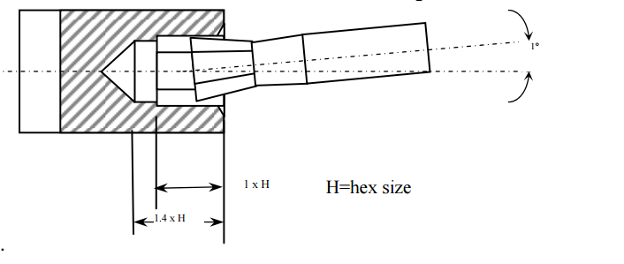
The figure above shows all rotary-broach angles. As shown, in addition to angle ɵ, which is the holder’s one-degree angle, angle ɵf, the tool clearance angle, must also be considered.
Speed and Feed Rate
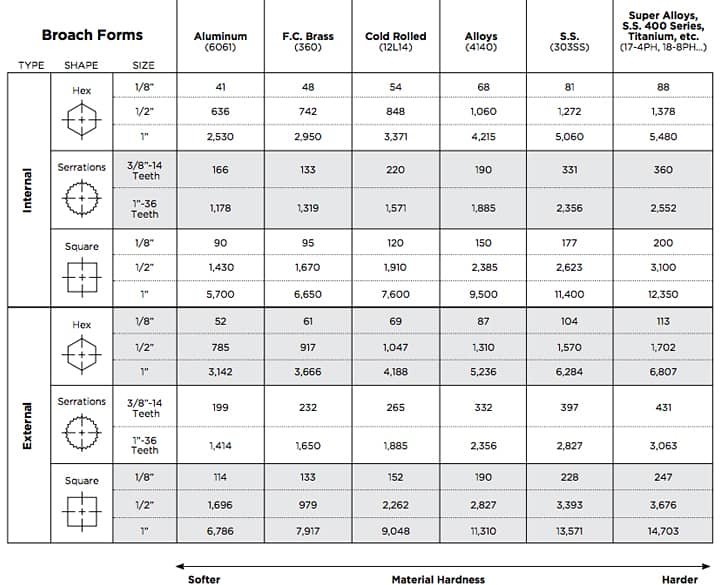
The table above can be used to calculate speed and feed rate. It is recommended for different materials when producing a hexagonal profile. For square or rectangular profiles, these values are reduced. A rectangular profile requires a lower speed and feed rate than a square profile.
Our Recommendation
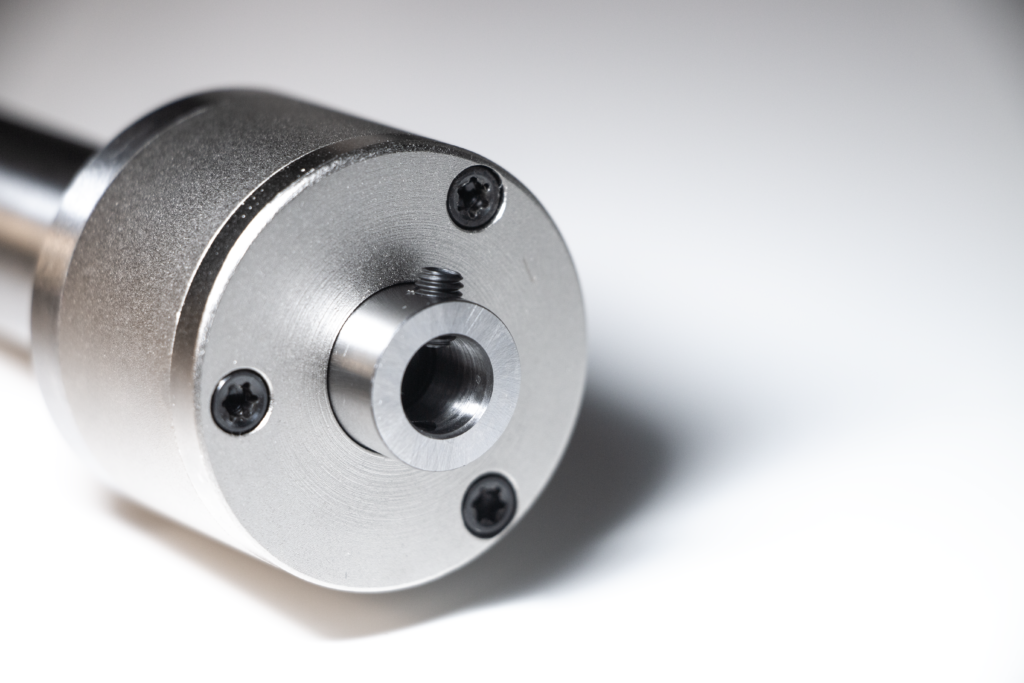
The rotary broach recommended by YonarTools is the BM Italy brand, which also allows bearing replacement. This rotary broach has been fully tested and has guaranteed life and quality.
Related Technical Topics
This article is also related to the following technical searches:
- Rotary broach
- Punch broaching
- Broaching
- High Speed Steel (HSS)
- Titanium nitride
- Titanium carbonitride and titanium aluminium nitride