What Is Thread Whirling?
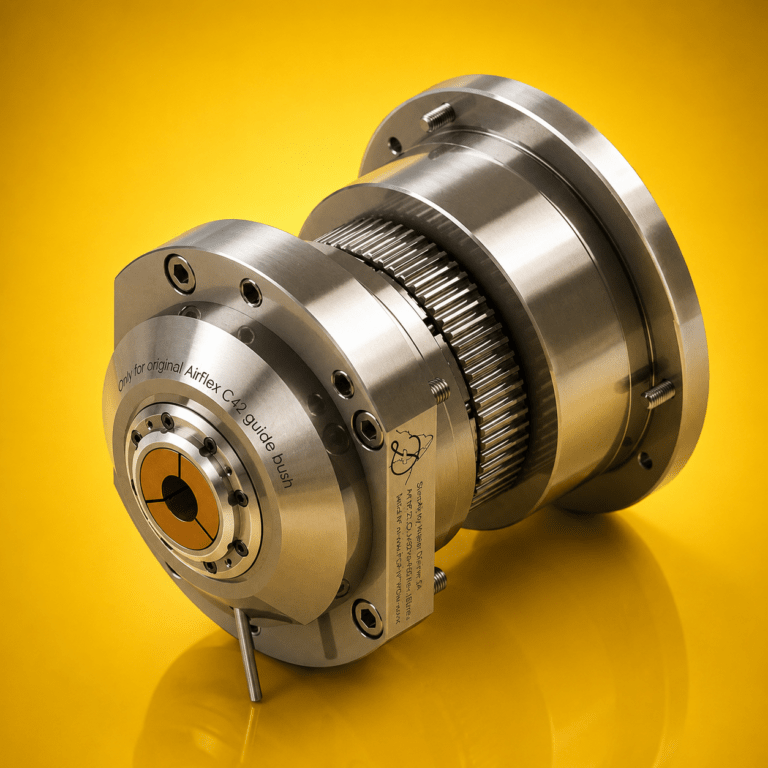
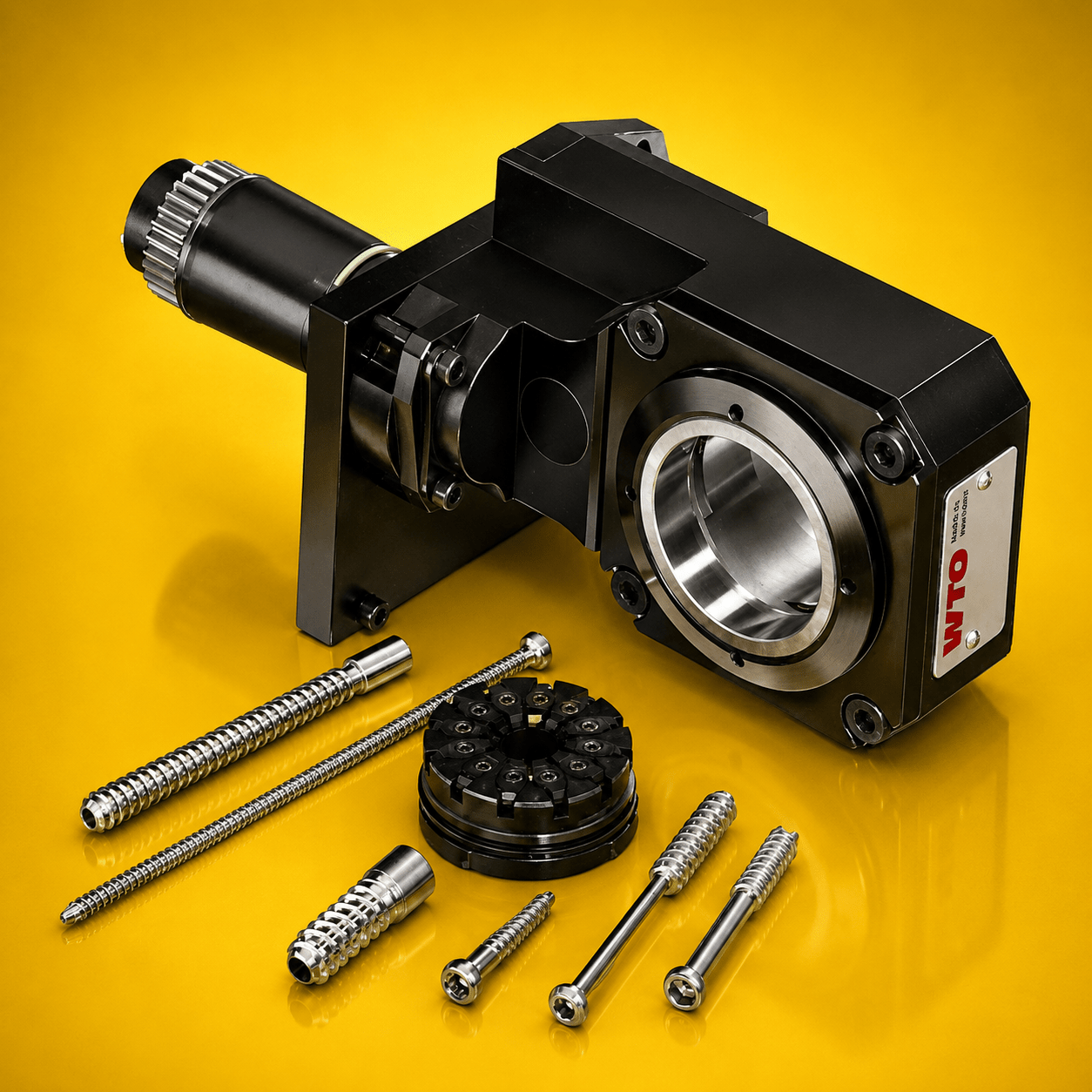
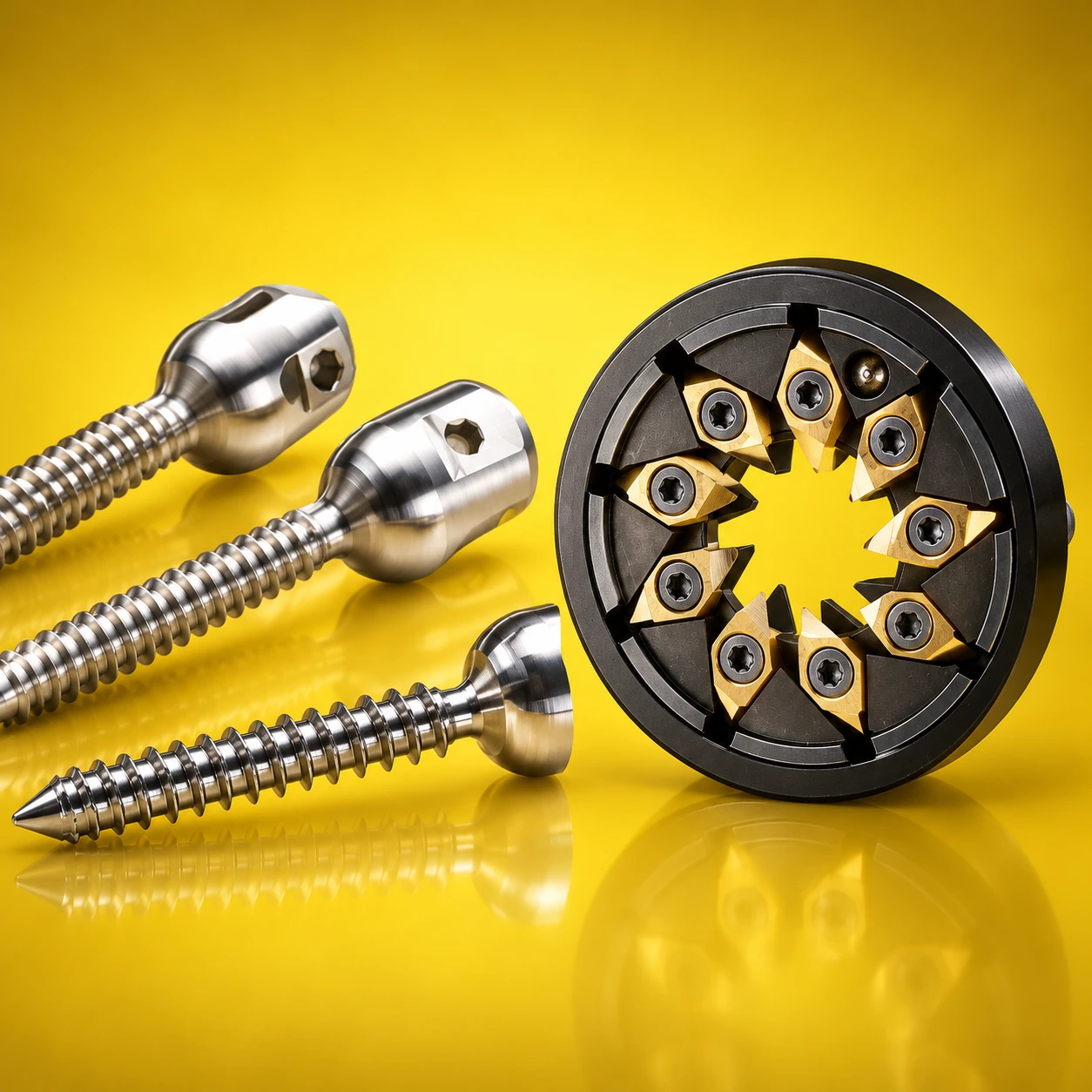
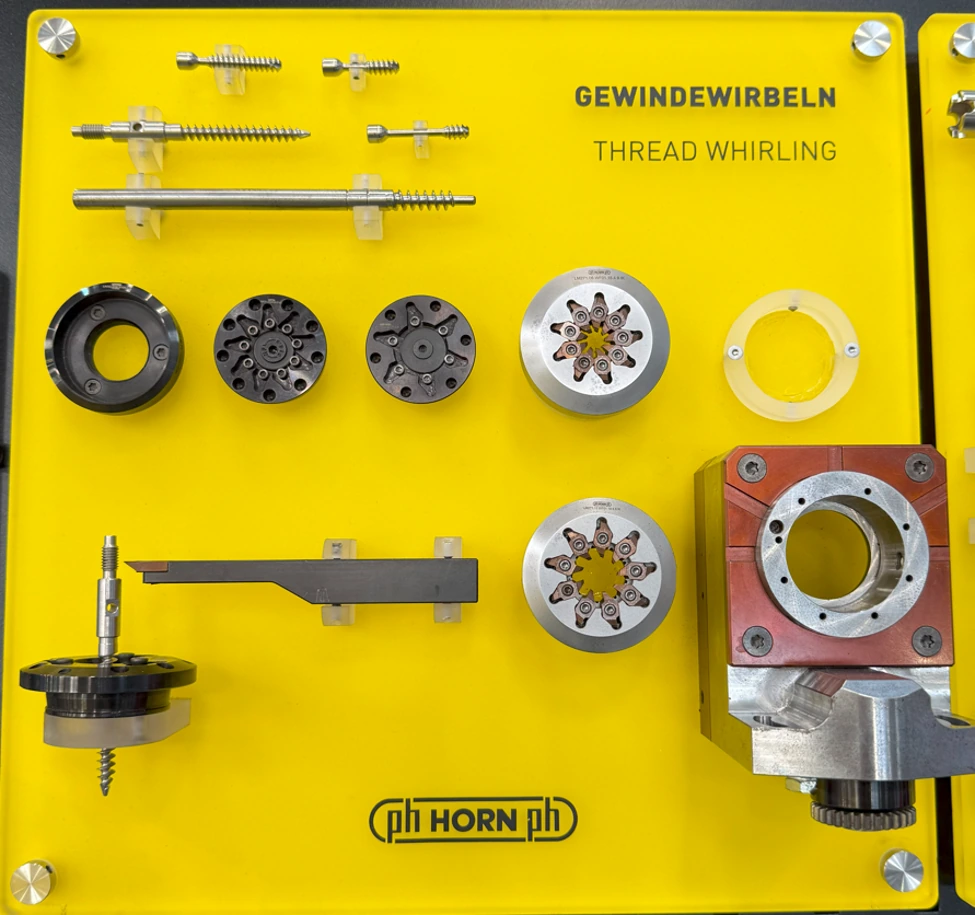
Thread whirling is a thread-production process in which several cutting inserts are mounted on a rotating ring, called a whirling ring. The inserts rotate at high speed around the workpiece to form a thread in one continuous operation.
How Does Thread Whirling Work?
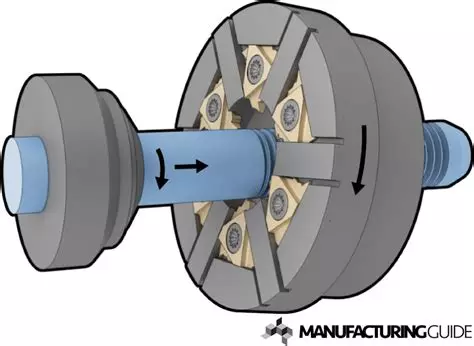
Step 1: Rotation of the whirling head
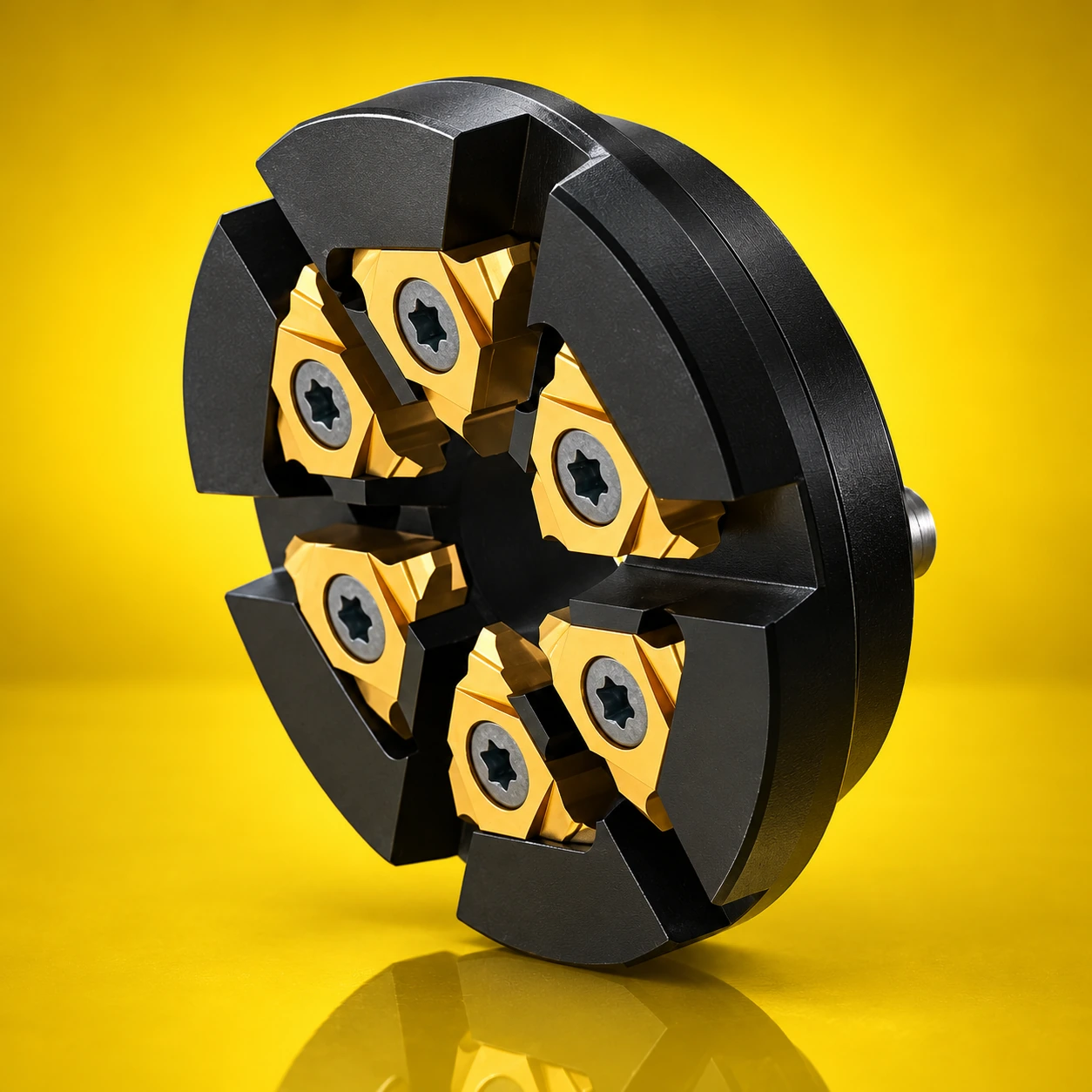
The whirling head contains several cutting inserts mounted on a ring or disc. The head rotates at high speed around the workpiece axis and performs the thread-cutting operation.
Step 2: Workpiece rotation
During the process, the workpiece also rotates through the machine spindle. Its rotational speed is generally much lower than the speed of the whirling head.
Step 3: Coordinating head and workpiece rotation
To produce the correct thread pitch, axial movement of the head or workpiece must be coordinated precisely with workpiece rotation. This coordination determines the final thread pitch.
Step 4: Progressive thread formation
Unlike conventional methods, where a single tool progressively cuts the thread, several inserts take part in cutting in sequence during whirling. The thread forms progressively along the part.
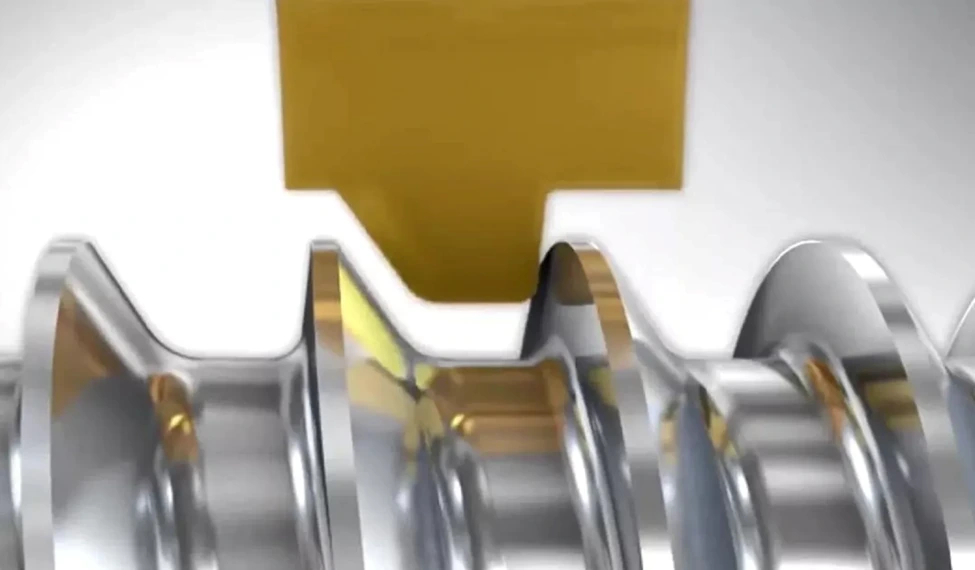
Step 5: Chip evacuation
Because the cutting load is divided among several inserts, chips are smaller and easier to evacuate. This contributes to thread quality and long tool life in thread whirling.
Main Components of Thread Whirling
Whirling head
A rotating assembly that holds the cutting inserts and rotates at high speed around the workpiece to create the thread.
Whirling inserts
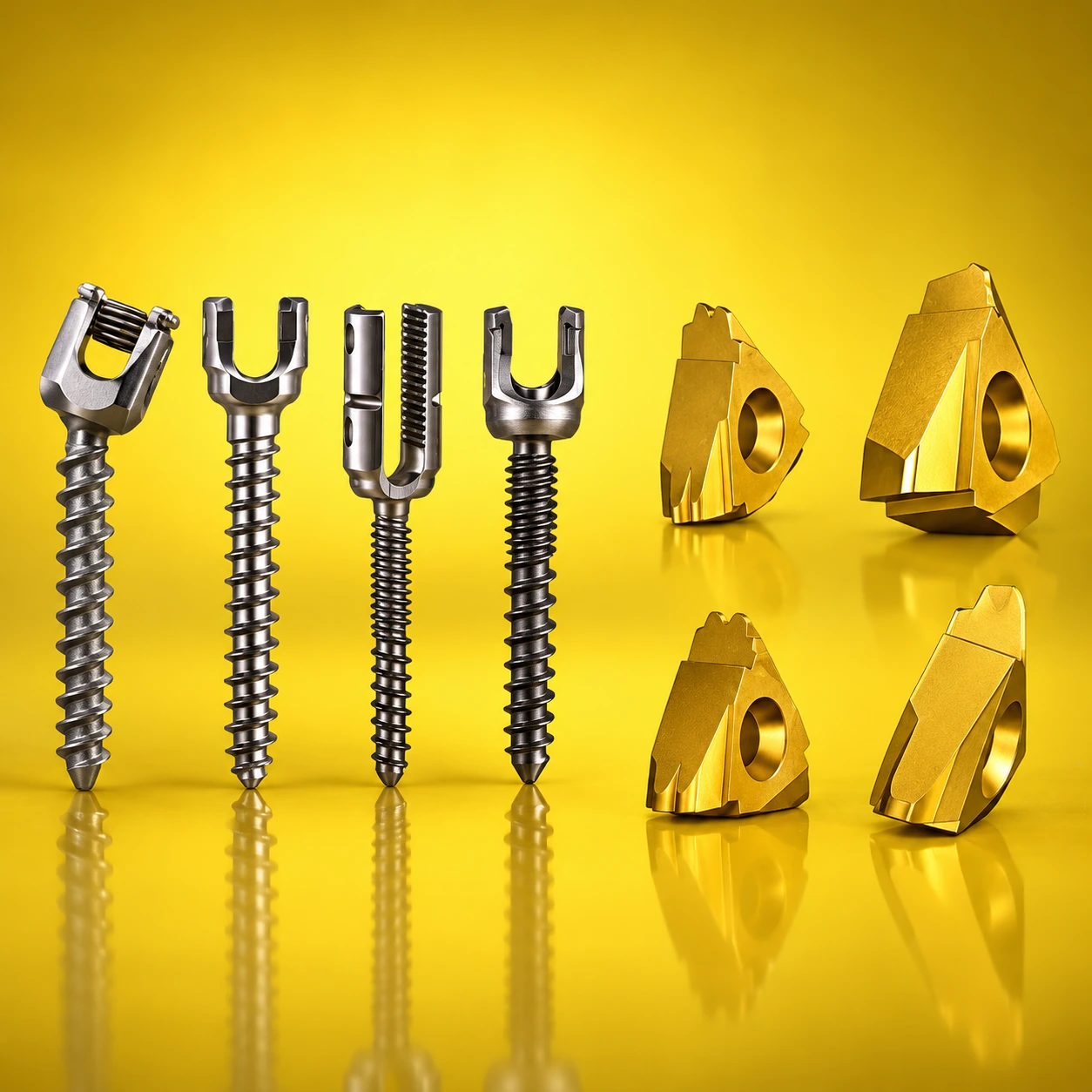
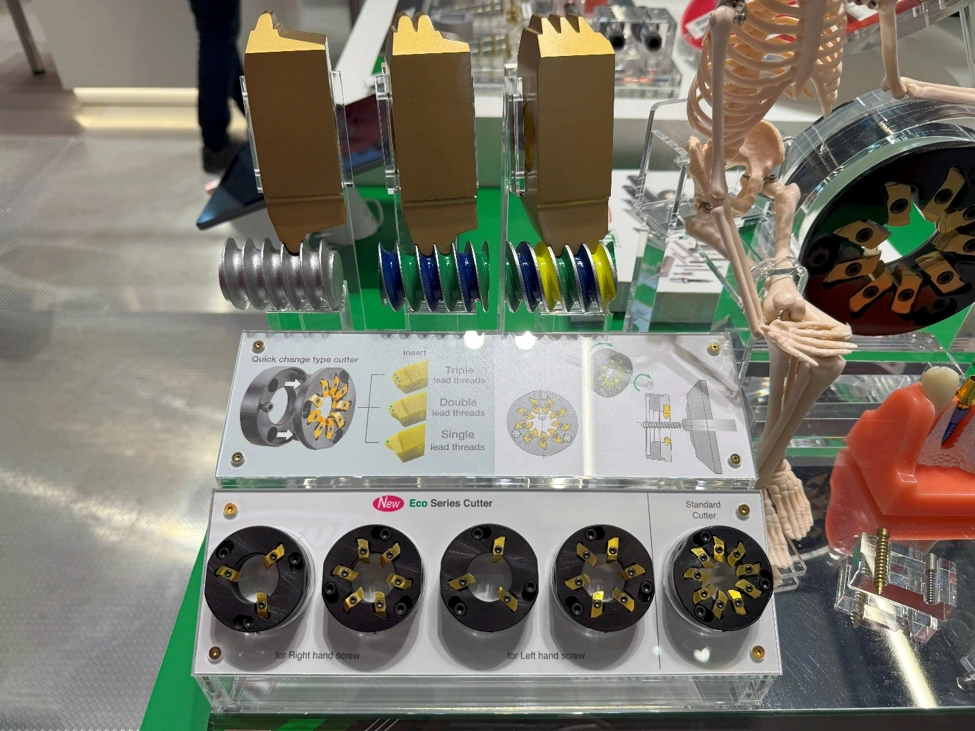
The inserts perform the thread cutting. Several inserts are installed on the head; each removes part of the material so that the thread form develops progressively.
Bearing and gear system
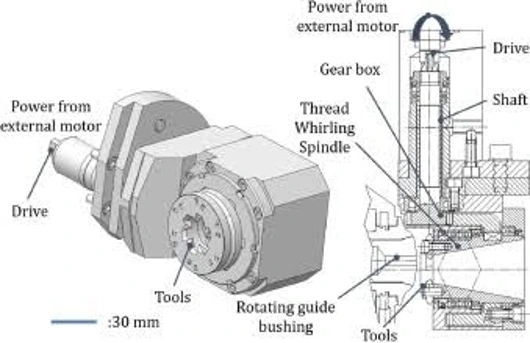
The transmission system inside the whirling head controls precise, stable rotation of the assembly and enables high-speed rotation.
Why Use Thread Whirling on a Swiss-Type Machine?
Strong performance on long, slender threads
Swiss-type machines provide good support for long, slender parts. Thread whirling also produces lower cutting forces, making the combination well suited to these parts. It reduces the likelihood of workpiece bending and vibration.
Lower cutting forces
Several inserts take part in cutting in sequence, so the cutting load is shared between them. This lowers forces on the part and improves process stability, which is especially important for small-diameter parts.
High thread quality
Thread whirling can produce threads with high accuracy, suitable surface quality and uniform geometry. This is important in medical, dental and aerospace work.
Complete machining in one stage
Threading can be performed on the same machine as turning, drilling and milling. This reduces production time, removes extra setups and improves accuracy.
Suitable for medical and dental equipment
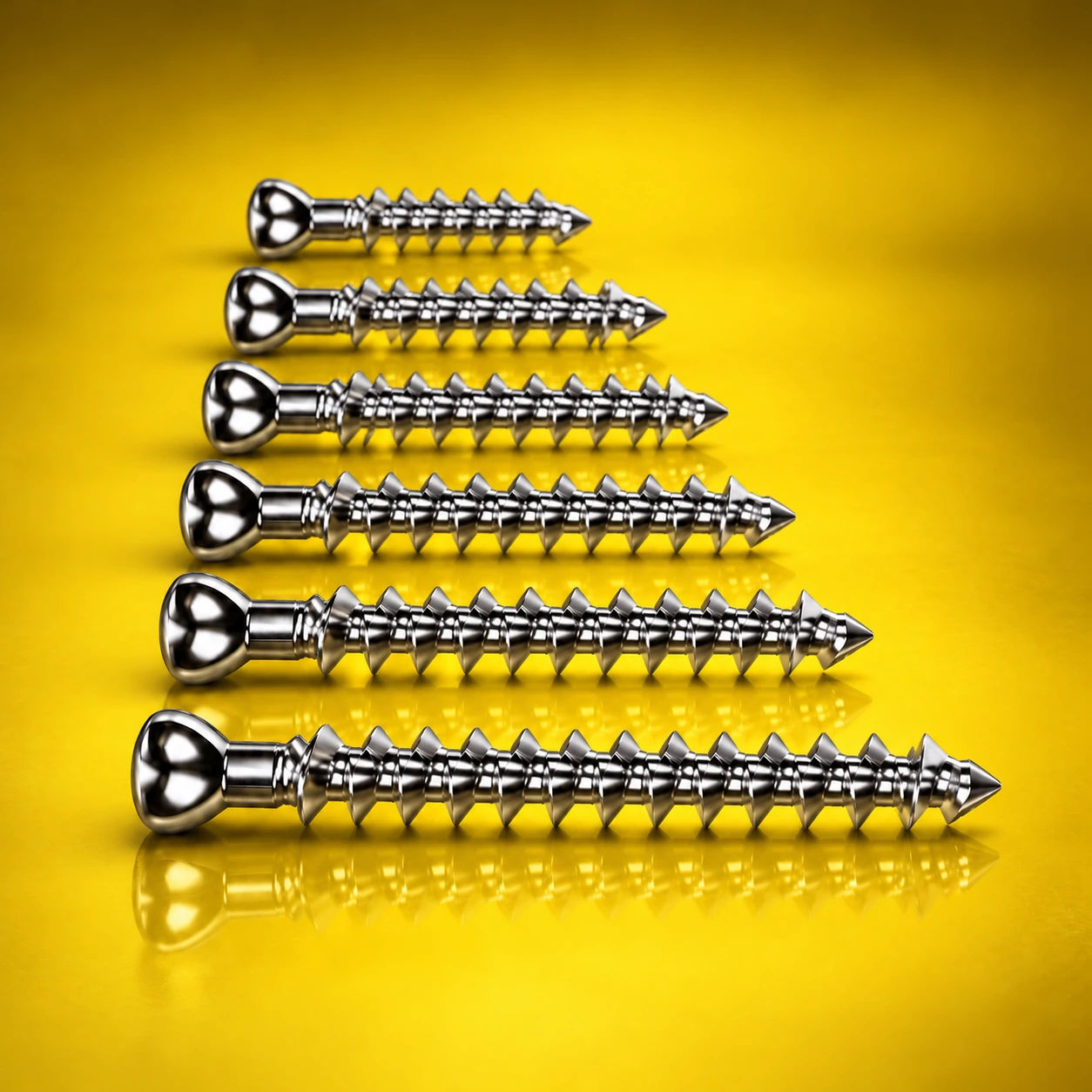
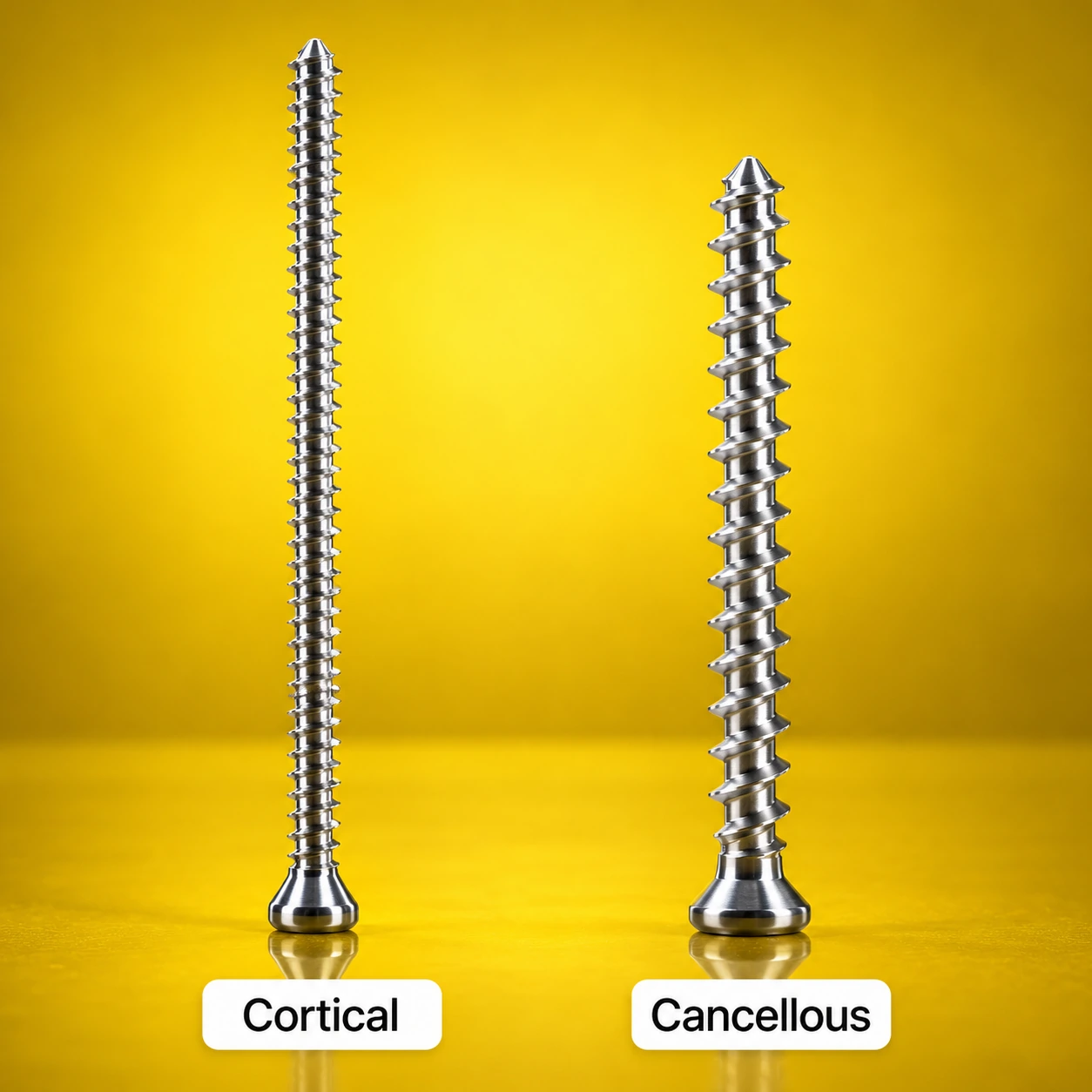
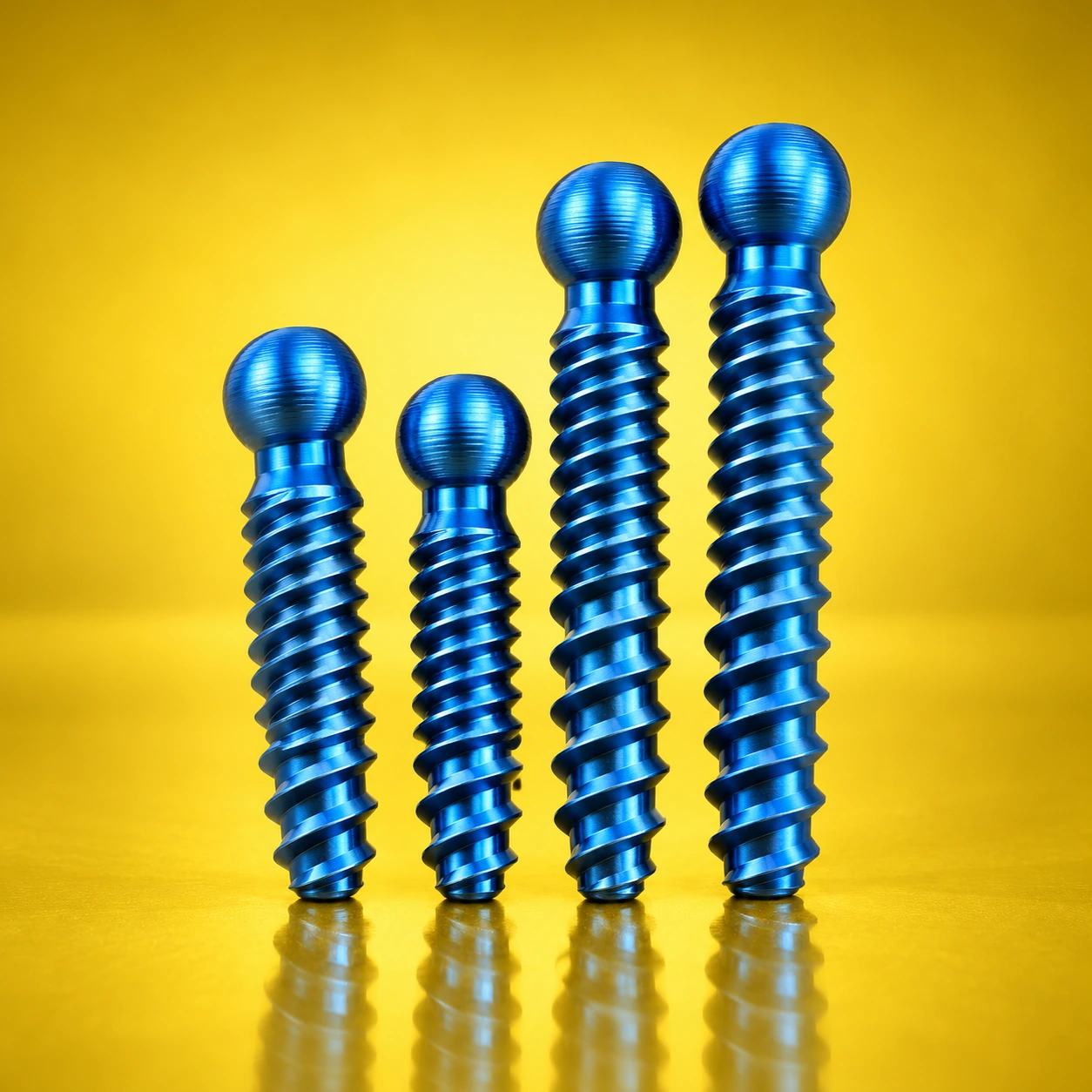
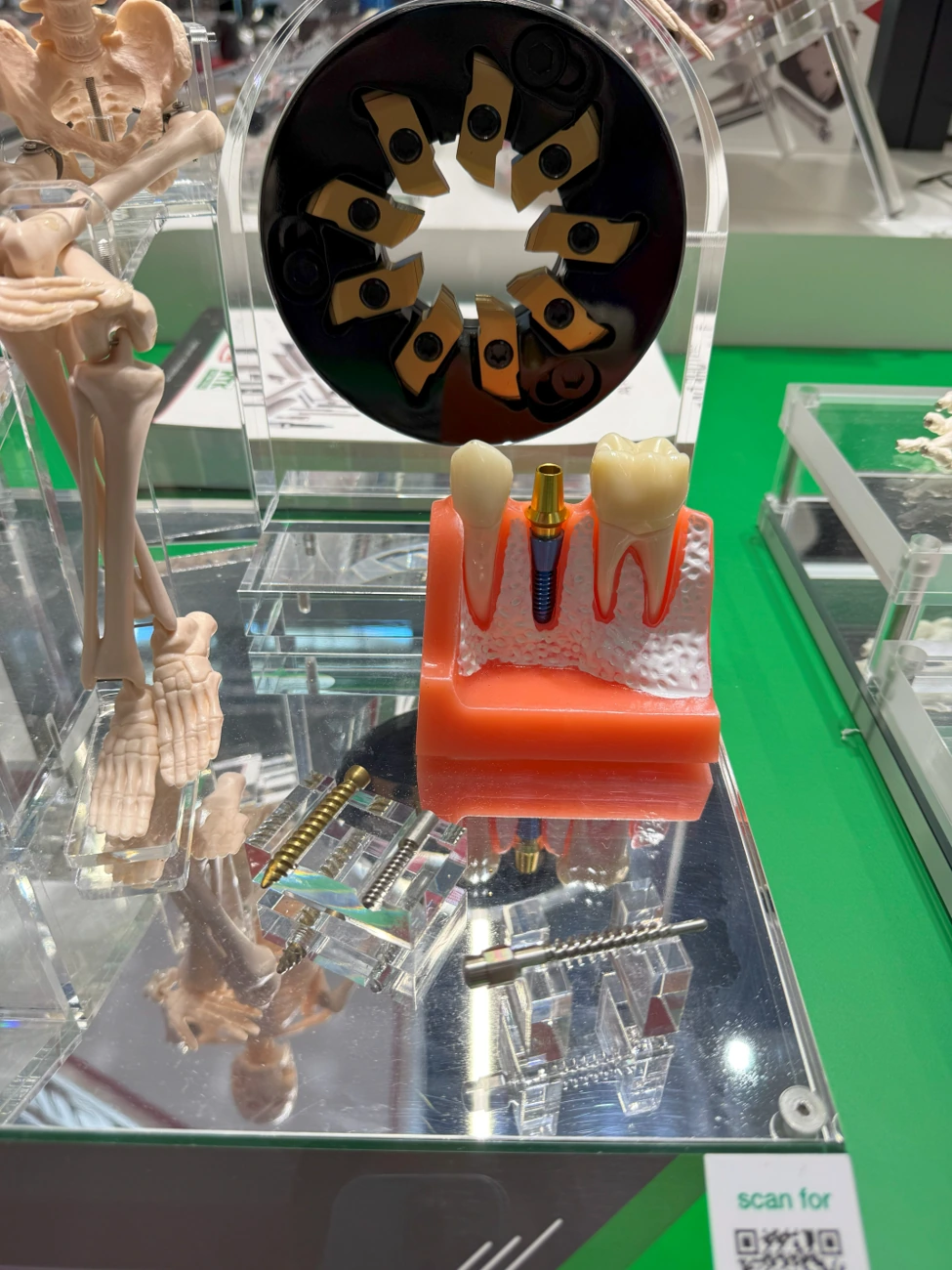
A large share of thread-whirling applications concerns bone screws, trauma implants, spinal implants and dental implants. Swiss-type machines combined with thread whirling can produce these complex parts accurately.
Complex thread forms
Thread whirling can produce forms that are more difficult with conventional methods:
- Buttress threads
- Multi-start threads
- Bone-screw threads
- Custom medical threads
Thread-Whirling Process Design Considerations
Screw geometry
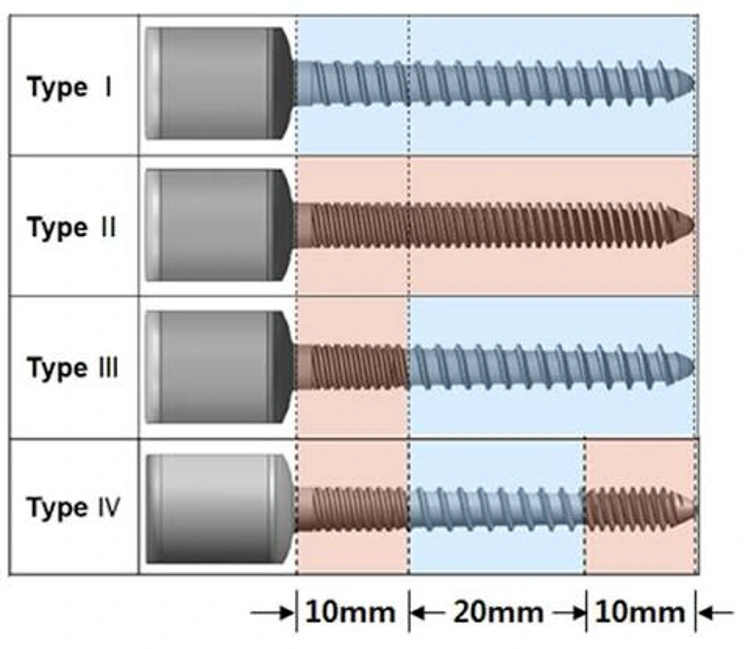
Points to check include thread diameter, pitch, screw length, thread profile, and whether the thread is single-start or multi-start. The more complex the thread geometry, the more important the head and insert design becomes.
Machined material
Common screw materials include stainless steel, titanium alloys, cobalt-chromium alloys, aluminium and brass. Titanium and stainless steel are among the most common materials for medical parts.
Workpiece stability
Part stability during threading is important. Vibration, bending or movement can affect thread accuracy. Swiss-type machines support the part with a guide bushing, which is especially useful here.
Thread-Whirling Challenges
Insert wear
Causes: hard material, unsuitable parameters, insufficient lubrication and long production runs.
Solution: replace inserts on time, correct cutting parameters and use a suitable coating.
Low thread accuracy
Causes: incorrect whirling-head setup, insert wear or axis-synchronisation error.
Solution: check machine settings, inspect tooling periodically and check the machine program.
Whirling head and workpiece not synchronised
Causes: programming error or incorrect machine-parameter settings.
Solution: check thread parameters, check axis synchronisation and conduct an initial test before volume production.
Chip-evacuation problems
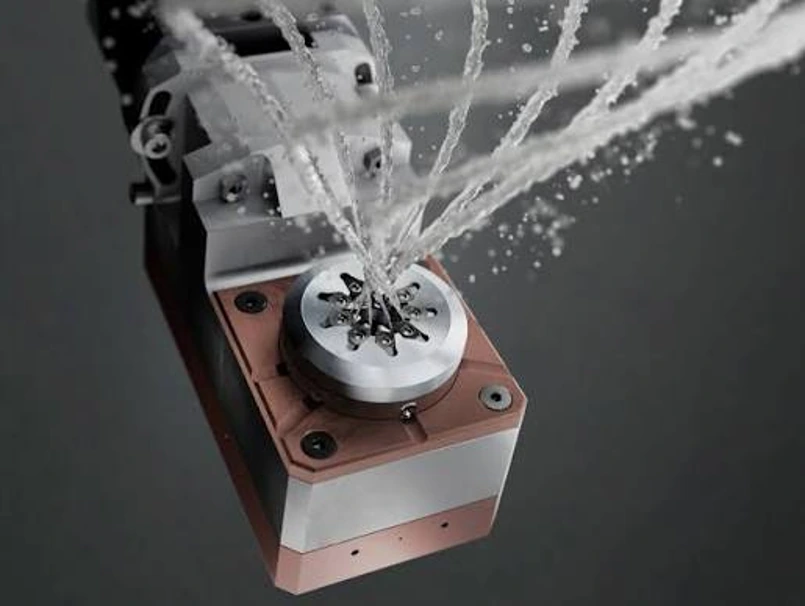
Causes: long chips, insufficient coolant pressure or unsuitable insert geometry.
Solution: correct coolant delivery, select suitable insert geometry and correct cutting parameters.
Workpiece bending
Causes: a high length-to-diameter ratio, insufficient workpiece support or unsuitable machining conditions.
Solution: use the guide bushing correctly, reduce cutting forces and correct the setup.
Vibration
Causes: a long, slender part, worn inserts, unsuitable parameters or an unstable setup.
Solution: increase setup stability, inspect the tool and correct the parameters.
Related Technical Topics
This article is also related to the following technical searches:
- Swiss type
- Thread whirling
- Whirling head
- Whirling inserts
- Medical and dental equipment production
- Complex threads
- Titanium alloys
- Medical parts