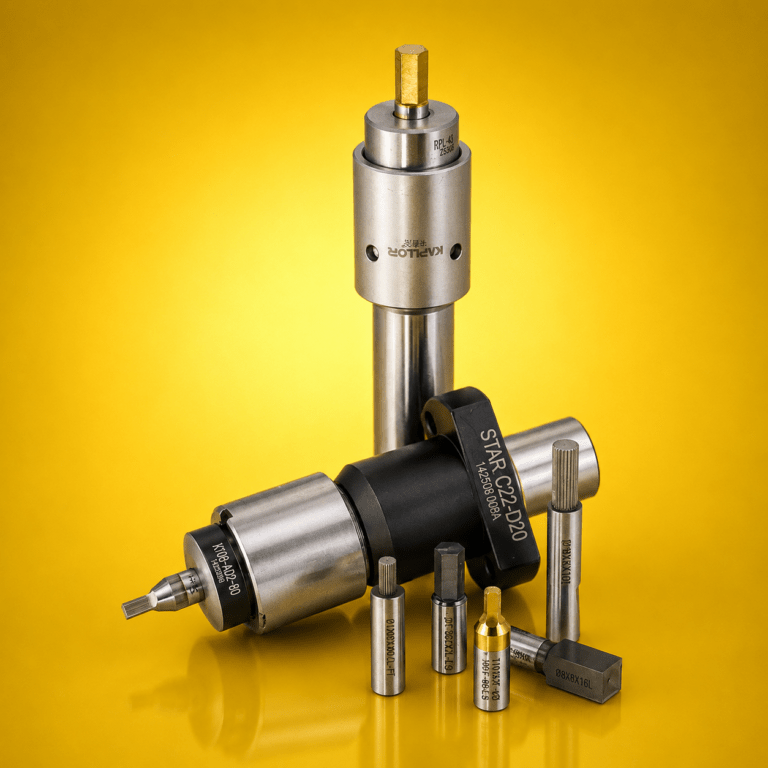
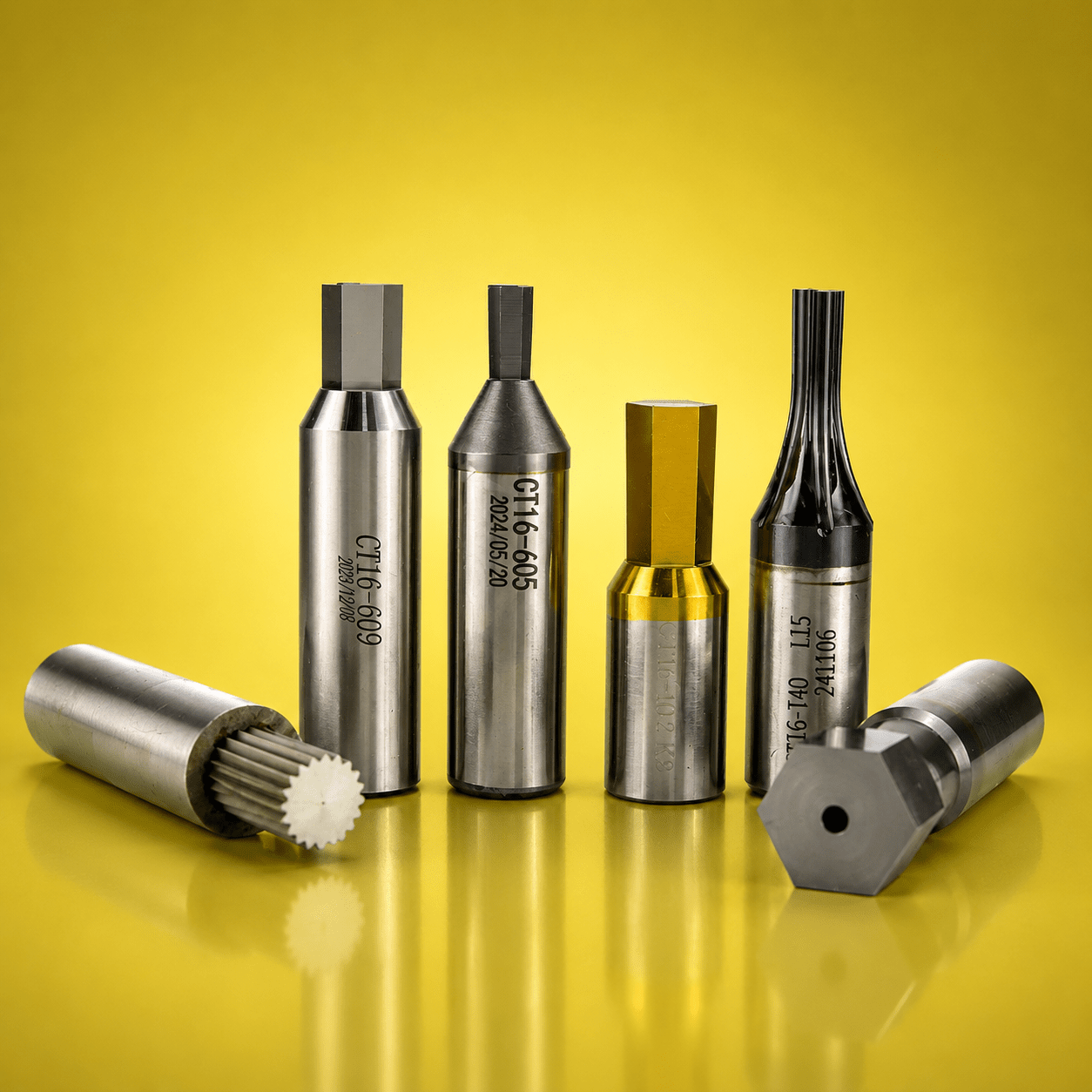
Broaches are classified according to ASME B18.3. The most common types used in rotary broaching are hexagonal, square, and rectangular broaches.
Hexagonal Broach

The hexagonal broach is the most commonly used type. It has six sides and is used to create hexagonal wrenching profiles. When using a hexagonal broach, select the pilot-hole drill diameter about 3% larger than the broach size. A chamfer must also be made at the end of the hole so the tool can enter easily.
Square Broach
A square broach is used to create square-shaped holes. The pilot-hole drill diameter for this type should be about 10% larger than the broach size. Speed and feed rate are reduced for a square broach compared with a hexagonal broach.
Rectangular Broach
A rectangular broach is used to create rectangular holes. This type can also be used as a punch. The speed and feed rate for a rectangular broach are lower than for a square broach.
To obtain the best result in broaching, suitable speed and feed rate are necessary. The recommended feed rate is between 0.02 and 0.07 mm per revolution, and spindle speed is between 600 and 800 rpm. At the first moment of tool engagement with the workpiece, reduce speed to 50 to 100 rpm to prevent tool damage.
Coatings Used
Different coatings are used to extend broach life and performance:
- TiN (titanium nitride) — gold colour; suitable for most metals
- TiCN (titanium carbonitride) — purple-grey colour; higher hardness than TiN
- TiAlN (titanium aluminium nitride) — grey colour; the best heat resistance for high-speed machining
Related Technical Topics
This article is also related to the following technical searches:
- Types of broaches and how to calculate them
- Hexagonal broach
- Square broach
- Rectangular broach
- TiN titanium nitride
- TiCN titanium carbonitride
- TiAlN titanium aluminium nitride