What Is Rotary Broaching?
Rotary broaching is a machining process used to make internal or external profiles such as hexagons, squares, Torx, splines and other polygonal forms in one fast, continuous operation.
How Does Rotary Broaching Work?
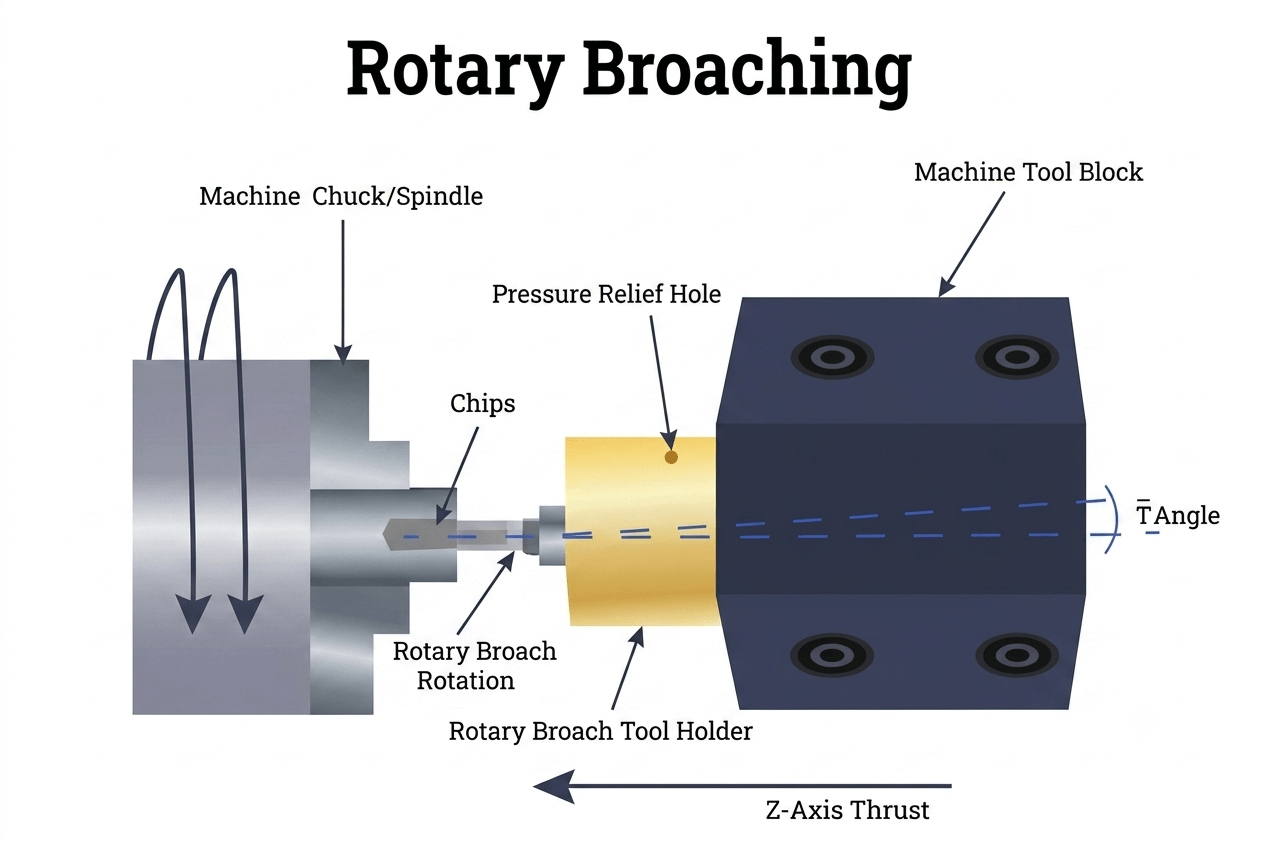
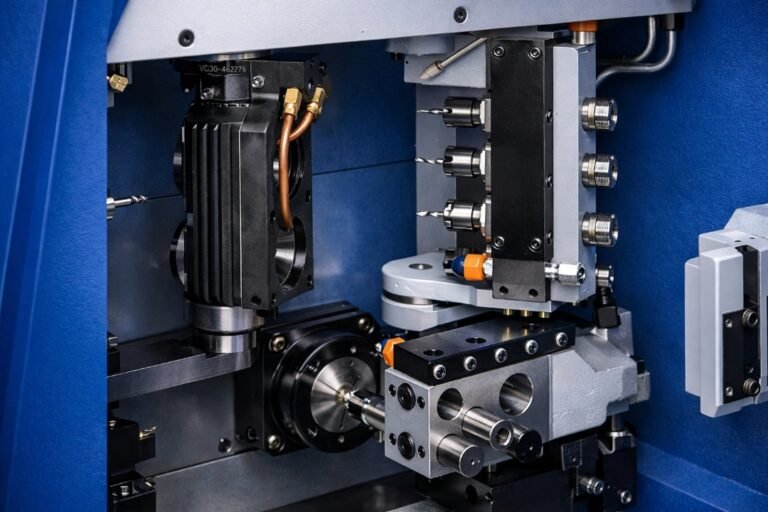
Rotary broaching in Swiss-type machines
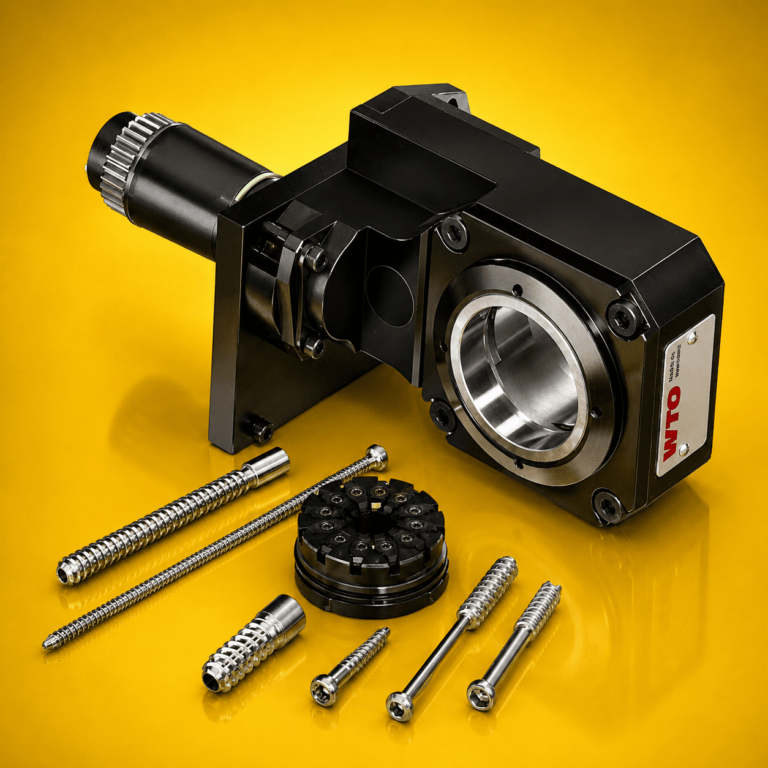
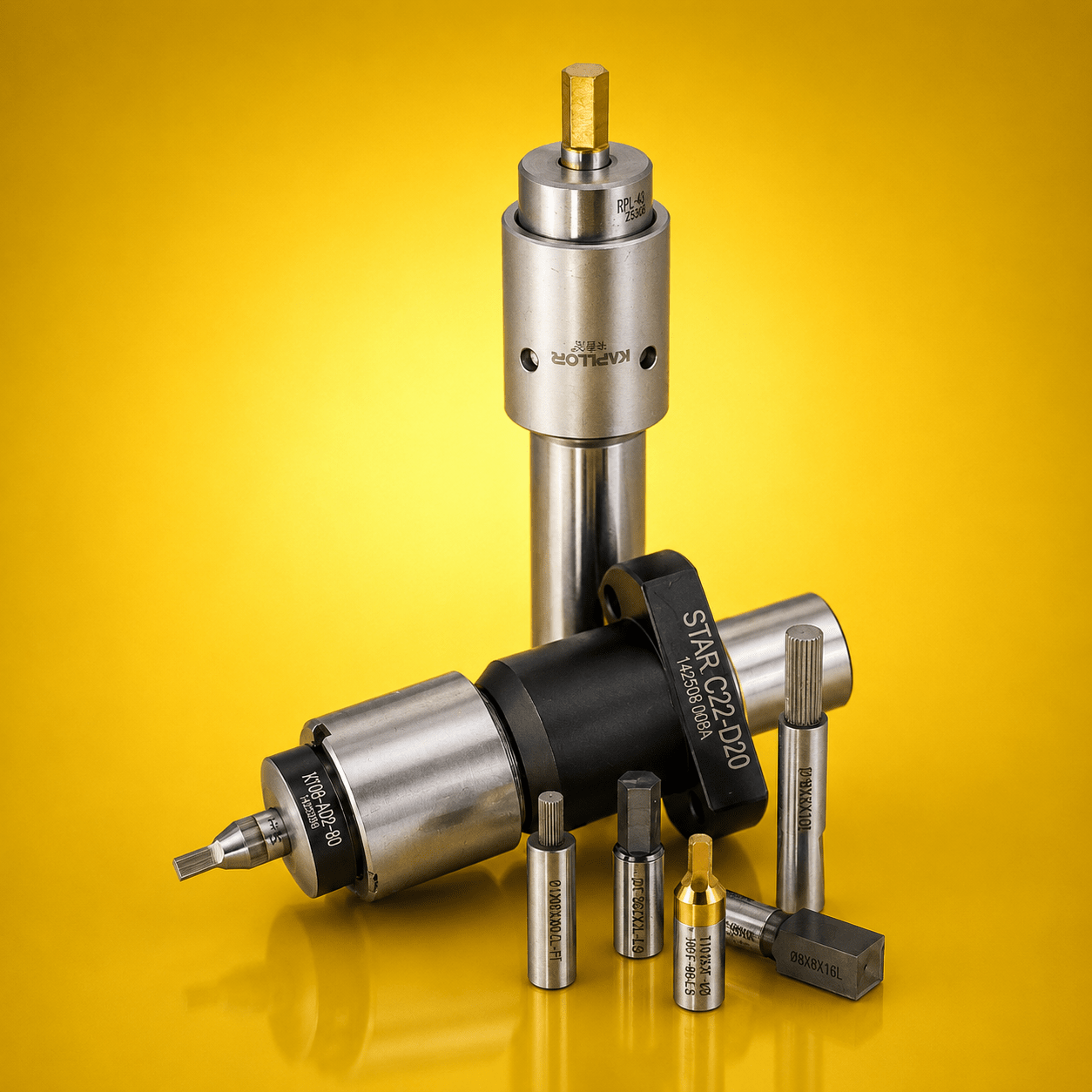
- The tool is fitted in a dedicated holder.
- The tool is set at approximately 1 degree to the workpiece axis.
- The workpiece rotates.
- The tool is fed gradually into the workpiece.
- The profile forms progressively.
Why Is Rotary Broaching Well Suited to Swiss-Type Machines?
Swiss-type machines are designed for small, precise and complex parts. Because rotary broaches work quickly, require little machining space and can make internal profiles in one setup, the process fits these machines well.
Complete the part in one setup
Rotary broaching can make internal profiles without removing the part from the machine. Turning, drilling and rotary broaching can be completed in one machining cycle. This reduces production time and also reduces errors caused by moving the part and setting it up again.
Higher production capacity
Rotary broaching generally adds only a few seconds to the cycle time and is suitable for volume production. Because the required profile is made in one axial movement, separate broaching equipment and secondary operations are not needed.
High accuracy
In Swiss-type machines, the part remains in a fixed position during machining. The profile made by rotary broaching can therefore maintain strong concentricity and accuracy relative to the other features of the part. This is important for medical, dental and precision components.
Fewer secondary operations
Without rotary broaching, profiles such as hexagons or Torx commonly need extra operations on other machines. A rotary broach removes these stages, reducing production time, delivery time and production cost.
Suitable for small, precise profiles
Rotary broaching is widely used on Swiss-type machines because it can form accurate profiles in small parts. It is suitable for medical implants, electronic connectors, watch components and precision fittings.
Common Rotary-Broach Profiles
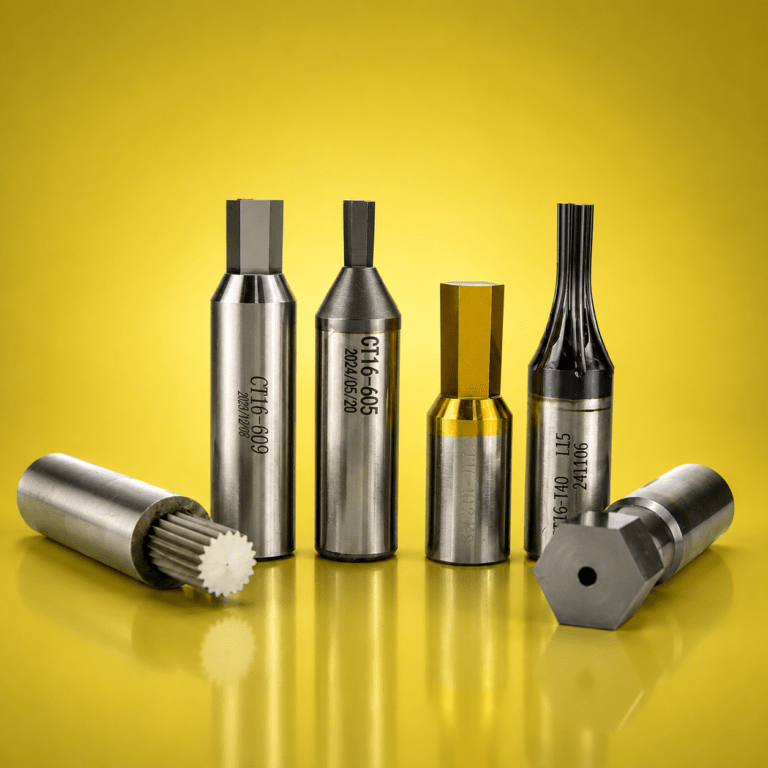
Rotary broaches can make a wide range of internal and external forms. Common industrial profiles include hexagons, squares, Torx, splines, serrations and custom profiles.
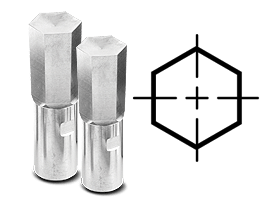
Hex profile
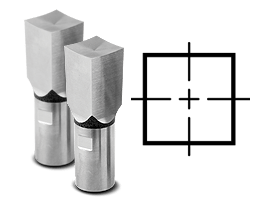
Square profile
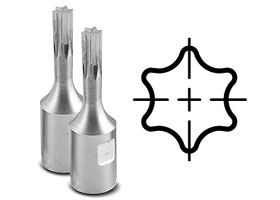
Torx
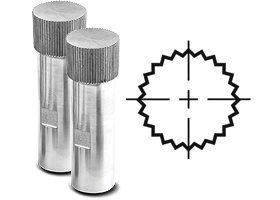
Serration
Points to Consider When Selecting a Rotary Broach
Pre-drill size
For many internal profiles, an initial hole is made before rotary broaching. Its diameter directly affects cutting forces, tool life and profile quality.
- If the initial hole is too small: cutting force and tool wear rise, and tool chipping becomes more likely.
- If the initial hole is too large: the final form may not develop fully and profile corners may remain incomplete.
Broaching-depth limit
As depth increases, the required force and tool-to-workpiece contact increase. An unsuitable depth can raise tool load, increase wear risk and cycle time, cause complete broach failure or leave insufficient depth. Profile depth should be selected to suit the tool size and type.
Workpiece material
Common materials include stainless steel, carbon steel, brass, aluminium and titanium alloys. Harder materials generally create greater cutting forces and may require a lower feed rate or tools with specific coatings.
Need for chamfering
Almost all rotary broaches require a lead-in chamfer for correct entry. It allows smoother tool entry, reduces the initial impact and chipping risk, and extends tool life. Without a chamfer, the broach may not enter the workpiece correctly.
Common Rotary-Broaching Problems
Early broach-tool wear
Causes: unsuitable cutting speed, insufficient lubrication, hard material and excessive broaching depth.
Solution: use suitable lubrication, select correct cutting parameters and choose a tool coating suited to the workpiece material.
Broach-tool chipping
Causes: no suitable chamfer, tool misalignment, sudden impact when the tool enters, or an unsuitable initial hole.
Solution: use a suitable chamfer, check alignment and centring, and select the correct pre-drill diameter.
Incomplete final profile
Causes: insufficient depth, an overly large pre-drill diameter or worn tooling.
Solution: check broaching depth, control the initial-hole diameter and replace worn tools.
Poor profile surface quality
Causes: vibration, worn tooling, insufficient lubrication or unsuitable parameters.
Solution: correct the parameters, check lubrication and replace the tool.
Excessive forces on the rotary broach
Causes: a small initial hole, excessive depth, hard material or a dull tool.
Solution: revise the part design, correct the pre-drill and replace worn tooling.
Related Technical Topics
This article is also related to the following technical searches:
- Swiss type
- Rotary broaching
- Broaching
- Medical parts
- External broaching
- Internal broaching
- Hex broach
- Square broach
- Torx
- Pre-drill
- Broaching depth
- Titanium alloys
- Rotary broaching in Swiss-type machines