What Is a Guide Bushing?
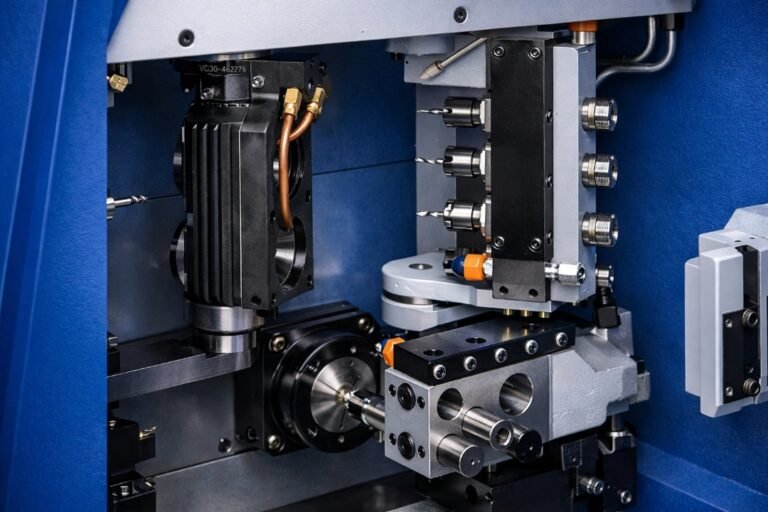
A guide bushing is one of the main components of Swiss-type machines. It supports the workpiece during machining. Located near the cutting zone, it allows bar stock to pass through with minimal deflection.
Unlike conventional lathes, where the workpiece is mainly held by a collet or chuck, the guide bushing has an important role in keeping the part stable throughout Swiss-type machining.
Why Is a Guide Bushing Important?
When machining parts with a high length-to-diameter ratio, cutting forces can cause bending, vibration and lower part accuracy. By supporting the workpiece close to the cutting zone, a guide bushing reduces these effects.
For this reason, guide-bushing technology is one of the main reasons Swiss-type machines can produce long, slender, high-precision parts.
How Does a Guide Bushing Work?
In a Swiss-type machine, the bar stock passes through the guide bushing and only a short section projects in front of it. Machining is carried out very close to the bushing. This arrangement supports the workpiece continuously during cutting and prevents cutting forces from causing bending or vibration.
Benefits of Guide-Bushing Technology
Better workpiece support
The primary function of a guide bushing is to provide continuous support close to the cutting zone. This is particularly important for long, slender parts and helps prevent deformation during cutting.
Less workpiece bending
For parts with a high length-to-diameter ratio, cutting forces can bend the workpiece. By reducing the distance between the support point and the cutting point, the guide bushing reduces deflection.
Higher dimensional accuracy
Lower bending and greater stability help produce the finished part more accurately. This matters in medical, dental and electronics applications where tolerances are very tight.
Better surface finish
When the part is more stable during machining, unwanted vibration is less likely. Surface quality improves and the need for secondary finishing is reduced.
Machining long, thin parts
Guide-bushing technology makes it possible to produce parts that are difficult to machine on conventional lathes because of their length or small diameter. This is why Swiss-type machines are widely used for medical parts, implants, connectors and precision components.
Guide-Bushing and Guide-Bushingless Modes
Modern Swiss-type machines usually work both with and without a guide bushing. The choice depends on part dimensions, length-to-diameter ratio, material and production requirements.
Guide-bushing mode
Bar stock passes through the guide bushing and machining takes place close to it.
Benefits:
- Better workpiece support
- Less part bending
- Less vibration
- Higher dimensional accuracy
- Suitable for long, slender parts
Applications: dental implants, orthopaedic parts, electronic components and watch parts.
Guide-bushingless mode
In this mode, the headstock can bring the workpiece closer to the cutting area. It is generally used for shorter parts.
Benefits:
- Less material waste
- Less setup time
- Suitable for short parts
- Suitable for some specific materials
Guide-Bushing Types by Material
Tungsten-carbide guide bushings
This is the most common type in modern Swiss-type machines. High hardness and strong wear resistance make it suitable for high-precision, high-volume production.
- Very high wear resistance
- Long service life
- Maintains accuracy in volume production
- Suitable for tight-tolerance parts
Steel guide bushings
These are generally used in general applications or some older machines. Their lower initial cost is an advantage, but their wear resistance and service life are lower than carbide versions.
Guide bushings with special coatings
Some applications use special coatings to improve wear resistance and reduce friction. These coatings reduce friction and wear and extend working life.
Guide-Bushing Types by Design
Fixed guide bushings
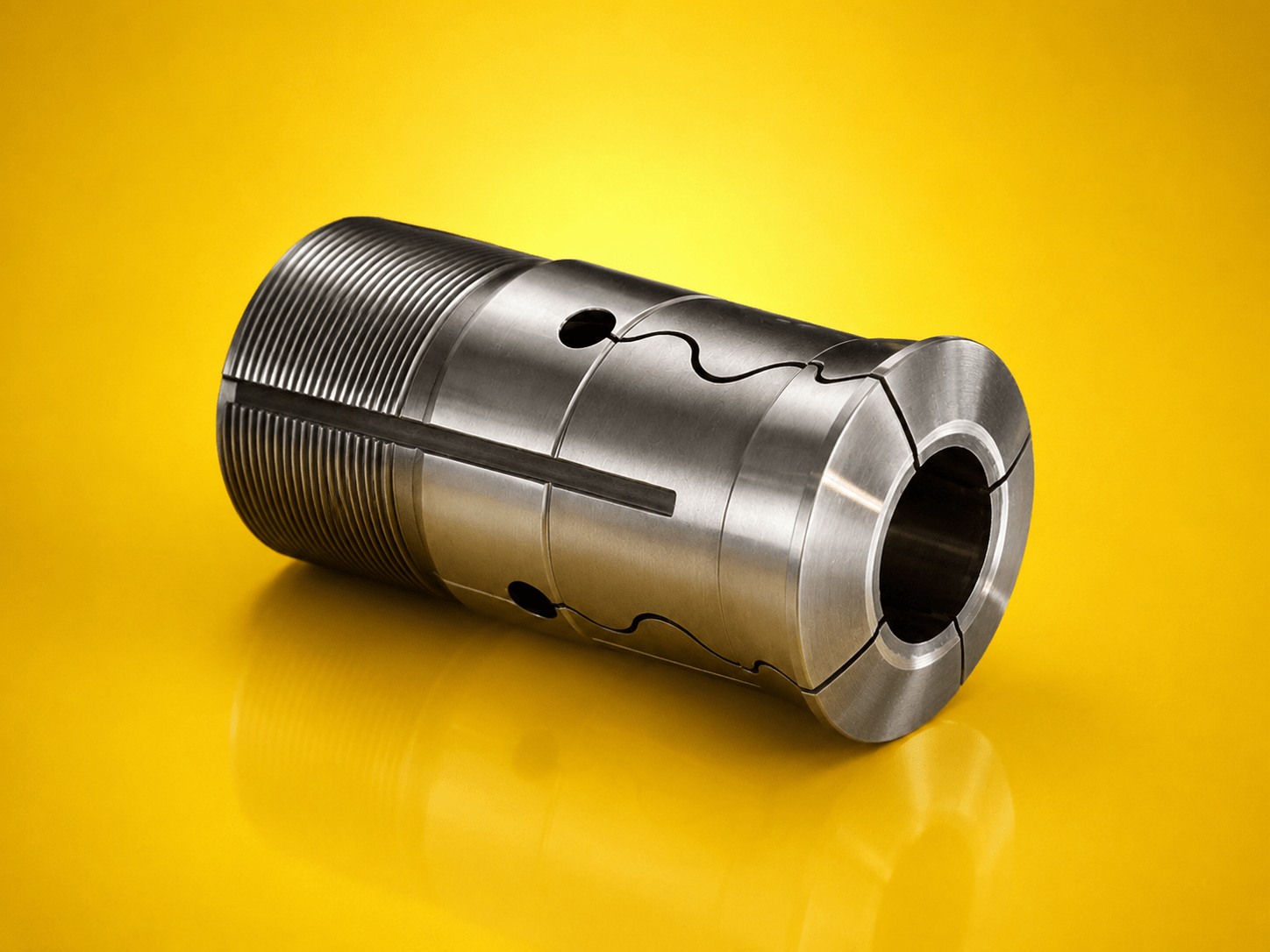
The most common design. The internal diameter is fixed and used for bar stock of one diameter. It offers high stability, lower cost and simple maintenance, and is suitable for volume production and fixed-diameter parts.
Adjustable guide bushings
The internal diameter can be adjusted. They suit workshops with a wide range of parts, reduce the need to buy multiple bushings and shorten changeover time.
Rotary guide bushings
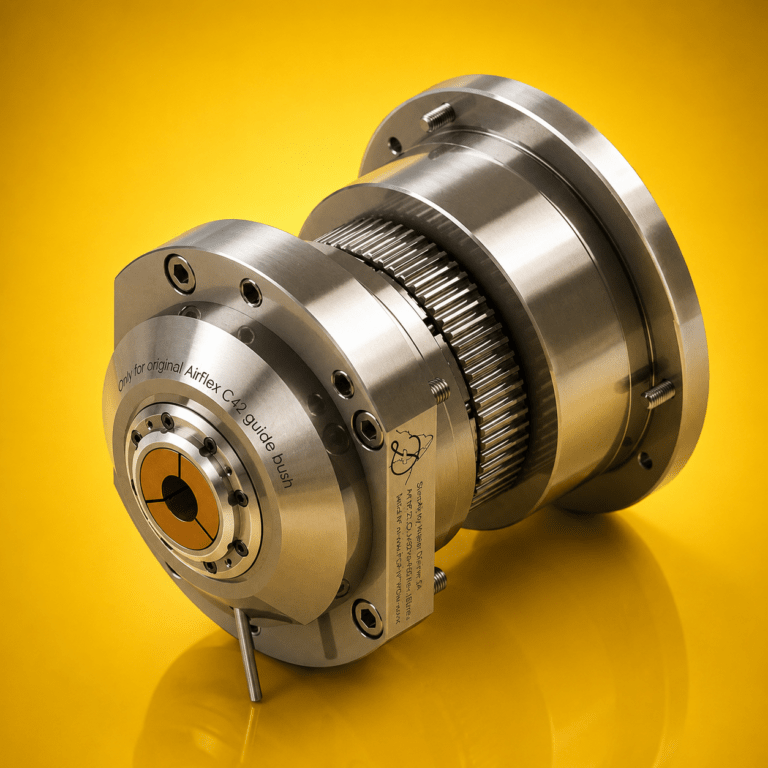
This type rotates with the workpiece. Relative contact between bar and bushing is reduced, so less friction is generated. It is suitable for machining copper, brass, aluminium, precious metals and thin-wall parts.
Common Guide-Bushing Problems and Their Solutions
Guide-bushing wear
Causes: use beyond service life, unsuitable lubrication, abrasive materials and prolonged high speeds.
Problems caused: lower dimensional accuracy, more vibration and poorer surface quality.
Solution: periodic inspection, timely replacement and suitable lubrication.
Poor workpiece surface quality
Causes: excessive clearance, contamination inside the bushing, incorrect bushing-diameter setting and internal-surface wear.
Solution: regular cleaning, checking bushing diameter and replacing worn bushings.
Workpiece vibration
Causes: guide-bushing wear, an unsuitable length-to-diameter ratio and unsuitable cutting parameters.
Solution: check the bushing condition, correct cutting parameters and use suitable settings.
Clearance between guide bushing and bar
The clearance between bar and guide bushing must be set correctly. Too much clearance reduces support and accuracy. Too little increases friction, heat generation and the risk of bar-surface damage.
Solution: select a guide bushing that matches the actual bar diameter.
Misalignment of bar and guide bushing
If the guide bushing is not aligned with the spindle axis, machining quality is seriously affected.
Solution: check concentricity during installation and carry out periodic machine adjustment.
Related Technical Topics
This article is also related to the following technical searches:
- Guide bushing
- Swiss type
- Collet
- Orthopaedic parts
- Dental implants
- Tungsten-carbide guide bushings
- Steel guide bushings
- Fixed guide bushings
- Adjustable guide bushings
- Rotary guide bushings
- Guide bushing in Swiss-type machines